
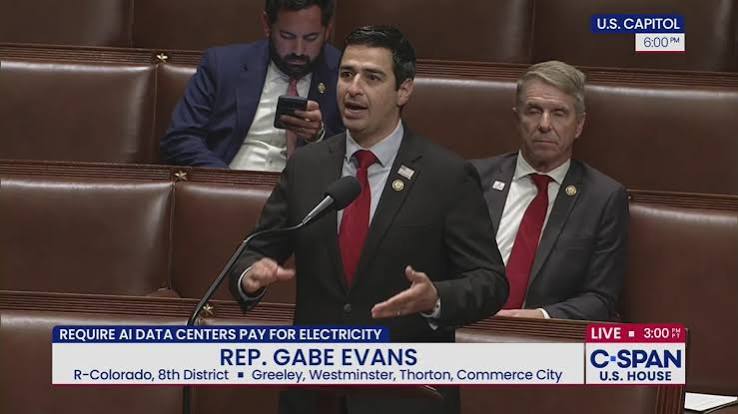
- The US House passed the Ratepayer Protection Act 417 to 3 on September 16, sending the first federal data center affordability bill to the Senate.
- The measure forces any data center drawing 100 megawatts or more at a single site to pay the full cost of the generation, transmission, and distribution upgrades it triggers.
- It responds to cost shifts like the one at Dominion Energy Virginia, where the data center share of transmission costs rose 148 percent while the residential share fell 27 percent.
The Ratepayer Protection Act clears the House with near-unanimous support
The House of Representatives voted 417 to 3 on September 16 to pass the Ratepayer Protection Act, the first data center affordability bill to move through a chamber of Congress. The margin crossed party lines cleanly, with Representatives Gabe Evans of Colorado and Kathy Castor of Florida carrying the measure, and it now heads to the Senate.
The bill sets a single federal rule for how utilities bill their largest customers. Any data center with a peak demand of 100 megawatts or more at one site must pay the full incremental cost of the generation, transmission, and distribution upgrades needed to serve it. Utilities also have to secure financial assurances from those customers before they build the new capacity, closing the gap where ratepayers fund infrastructure for a facility that could later scale back or leave.
States keep room to shape their own approach. The legislation gives them two years to adopt comparable standards, and it lets a state opt out if it has already legislated or held regulatory proceedings on the same question. That structure sets a federal floor for cost causation while leaving the details of electricity regulation where they have always lived, with state commissions.
| House vote | 417 to 3, September 16, 2026 |
| Applies to | Data centers of 100 megawatts or more at a single site |
| Core rule | Customer pays the full cost of generation, transmission and distribution upgrades |
| Safeguard | Utilities must secure financial assurances before building capacity |
| State option | Two years to adopt a comparable standard, or opt out if already acted |
| Dominion Virginia | Data center transmission cost share up 148 percent, residential share down 27 percent |
| Next | Moves to the Senate |
Why the 100 megawatt line changes who pays for the AI buildout
The threshold matters because it draws a bright line around the customers actually driving load growth. A single AI training campus can pull more power than a mid-sized city, and until now the upgrades to serve that demand were often spread across every household on the grid. Dominion Energy Virginia offers the clearest picture of the shift the bill targets: over recent rate periods the data center share of transmission costs climbed 148 percent as the residential share dropped 27 percent, moving the burden onto the facilities creating it.
Power availability already decides where the next AI campus gets built. This vote makes who pays for the grid part of that same decision.
For the companies building the AI economy, the vote reprices the cost of a new site. Power availability already decides where hyperscalers put their next campus, and a federal expectation that they cover their own grid upgrades folds a large, previously socialized expense directly into project math. The near-unanimous margin also tells operators something the individual state fights did not. Data center electricity costs have become a rare issue that unites both parties, and the affordability politics around the AI buildout are no longer a local dispute but a national one that the Senate will now inherit.
Santage is committed to independent, transparent journalism. This article is produced in accordance with Santage's Editorial Standards and aims to provide accurate and timely information. Readers are encouraged to verify information independently.