
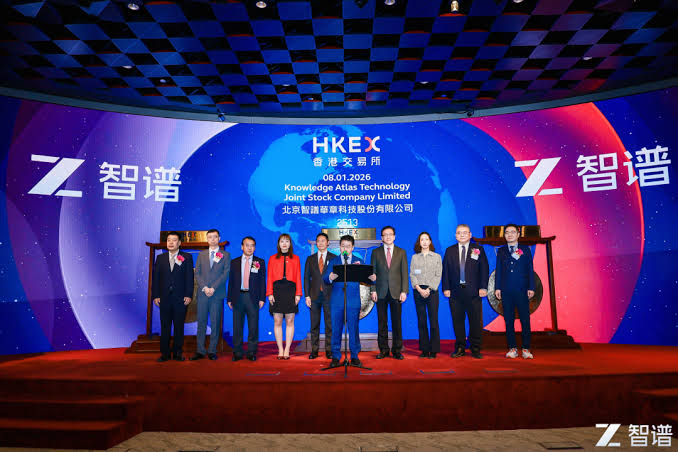
- Zhipu, which now trades internationally as Z.AI, reported first-half 2026 revenue of 954 million yuan, about $142 million, a fivefold increase driven almost entirely by its API business.
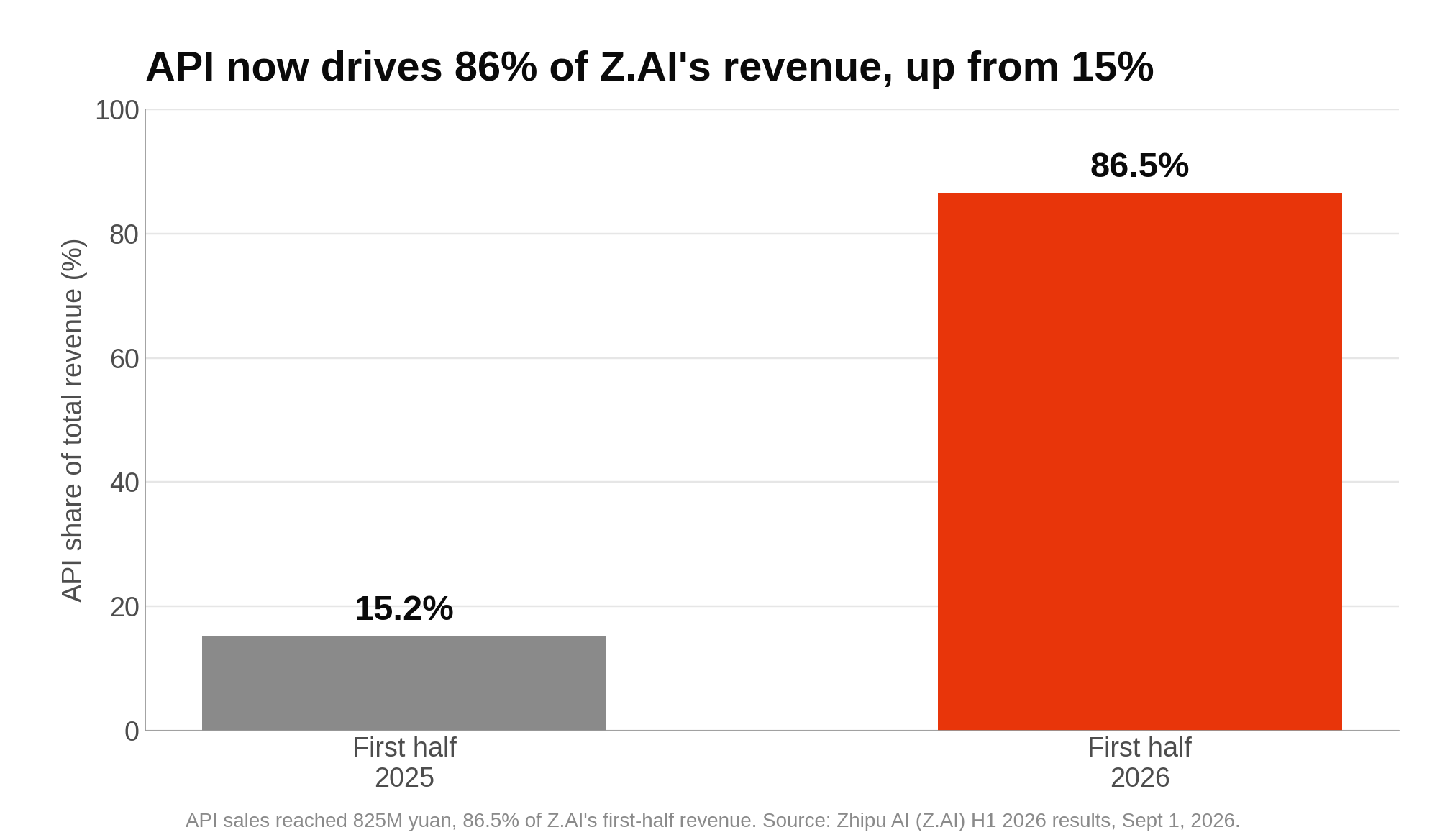
- API sales reached 825 million yuan and 86.5% of total revenue, up from 15.2% a year earlier, as the company shifted from selling models to selling per-call access to them.
- The growth came with a net loss of 2.07 billion yuan, and Bloomberg reported the result still missed estimates as China's AI price war squeezed the field.
A fivefold jump built almost entirely on API
Zhipu, the Beijing frontier lab that now uses the Z.AI brand abroad, has published its first set of half-year financials as a listed company, and the top line moved sharply. First-half revenue reached 954 million yuan, roughly $142 million, about five times the figure a year earlier. Nearly all of that increase came from one place. API revenue rose to 825 million yuan and now accounts for 86.5% of the business, against 15.2% in the same period of 2025.
The mix shift is the real signal. A year ago Zhipu still looked like a company that sold models and enterprise projects. Today it looks like a company that sells inference by the call, with coding cited as the key commercialization use case and its GLM platform billed per invocation. Investors have rewarded the transition, and the Hong Kong shares now trade around nine times their March listing price.
What the mix shift reveals about the strategy
Selling access rather than models changes what the company optimizes for, and the segment numbers show it. Enterprise-agent revenue rose 304% to 55.6 million yuan, while general-purpose model sales fell 54.6% to 67 million yuan. The large language model is becoming a metered utility rather than a product Zhipu ships, and usage is following. The GLM platform counted 5.8 million users in June and 7.4 million by the time of the results.
The product anchoring much of that usage marked its own milestone on the day the results landed. Zhipu's GLM Coding Plan, the subscription behind the coding demand it names as its key commercialization channel, turned one year old, the same span over which API revenue climbed from a sliver of the business to the bulk of it.
Making that model economical is the other half of the pivot. Zhipu says it cut the cost of token inference by about 80% since the start of the year, and gross margin on its open-platform and API business improved by roughly 25 percentage points to 24.6%. Cheaper tokens and a wider platform pull more developers, more calls lift revenue, and better unit economics keep the margin from collapsing as volume grows.
| Total revenue | 954 million yuan (about $142 million), roughly fivefold growth |
| API business | 825 million yuan, 86.5% of revenue, up from 15.2% a year earlier |
| Enterprise agents | 55.6 million yuan, up 304% |
| General-purpose models | 67 million yuan, down 54.6% |
| API gross margin | 24.6%, an improvement of about 25 percentage points |
| Token inference cost | down roughly 80% since the start of 2026 |
The bill that came with the growth
The scoreboard has a second column. Zhipu posted a net loss of 2.07 billion yuan for the half, narrowed 12.1% from a year earlier, while its adjusted loss widened by a similar margin. Research and development spending rose 33.6% to 2.13 billion yuan, a figure larger than the company's entire revenue. Growing fivefold and still spending more than it earns is the defining condition of a frontier lab, and being publicly listed simply means that condition is now itemized every six months.
The market context makes the losses harder to grow out of. Bloomberg reported that the result missed estimates as China's AI price war worsened, the same commoditizing pressure visible when DeepSeek pushed agentic coding toward commodity pricing and when Qwen's coding models closed the gap on Western leaders. When every domestic rival is cutting prices to win the same developers, an 80% cut in inference cost is less a competitive edge than the entry fee for staying in the game.
Z.AI's numbers describe the Chinese AI market in one line. Revenue is multiplying, prices are falling, losses are structural, and the public market is paying up anyway.
What it signals for the rest of the field
Zhipu is the first of China's frontier labs to show the world audited financials, and the pattern it reveals will apply to the others lining up behind it, all building on an increasingly self-reliant domestic stack. The API-first model can produce rapid top-line growth, and it can do so while margins stay thin and losses stay large, because the same price war that fuels adoption caps how much each call earns. For any lab weighing whether to monetize through a metered platform, Z.AI is now the working case study, in both the growth it can deliver and the burn it does not remove. The financials that impress on the revenue line are the same financials that will test how long investors keep funding the gap.
Santage is committed to independent, transparent journalism. This article is produced in accordance with Santage's Editorial Standards and aims to provide accurate and timely information. This article is not investment advice. Readers are encouraged to verify information independently.