
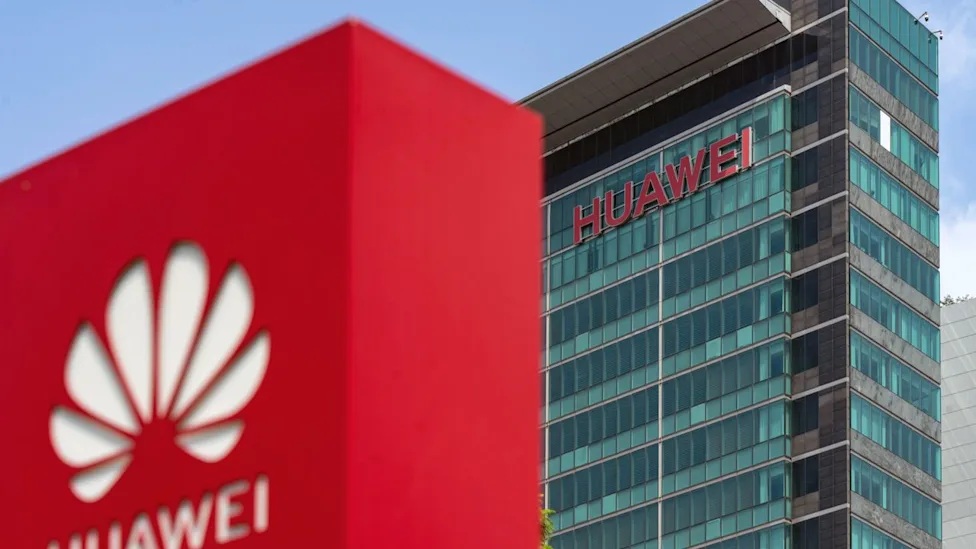
- At the Shanghai World AI Conference opening July 17, Huawei is showcasing its Atlas 950 SuperPoD, a single super node that links 8,192 Ascend chips and delivers 8 FP8 ExaFLOPS.
- DeepSeek's V4 model now runs entirely on clusters built from Huawei Ascend processors, taking Nvidia out of the training and inference path for a frontier Chinese model.
- Nine Turing and Nobel laureates and several heads of state are attending WAIC, with Xi Jinping appearing in person, while major US labs are largely absent.
Huawei's Atlas 950 super node is built to replace Nvidia, not match it
The story at this year's World AI Conference is not a chatbot. It is a cabinet. Huawei is bringing its Atlas 950 SuperPoD to the Shanghai floor, and the specification is a statement of intent. A single super node ties together 8,192 Ascend 950DT chips so they behave as one machine, delivering 8 FP8 ExaFLOPS of training performance across 160 cabinets. That is roughly twenty times the chip count of the CloudMatrix system it succeeds.
The design philosophy is the point. Individual Ascend chips still trail Nvidia's most advanced parts on raw performance per chip, and US export controls are the reason China cannot buy the Nvidia hardware it would otherwise use. Huawei's response is not to win chip against chip. It is to win at the level of the system, lashing many domestic accelerators together with high speed interconnect until the cluster reaches frontier scale. When you cannot buy the best chip, you build the biggest node.
| Metric | Detail |
|---|---|
| Accelerators | 8,192 Ascend 950DT chips operating as a single super node |
| Compute | 8 FP8 ExaFLOPS training and 16 FP4 ExaFLOPS inference |
| Physical scale | 160 cabinets across roughly 1,000 square meters, with 16.3 PB/s of interconnect bandwidth |
| Generational jump | Around 20 times the accelerator count of the prior CloudMatrix384 super node |
DeepSeek running on Ascend is the signal that matters
Hardware on a show floor is a claim. A frontier model running on it is proof. The more consequential disclosure around WAIC is that DeepSeek adapted its V4 model to run entirely on clusters built from Huawei Ascend chips. That closes the loop. A leading Chinese large language model can now be trained and served without a single Nvidia GPU in the critical path.
This is what a stack means. Silicon from Huawei, interconnect from Huawei, and an open weight frontier model from DeepSeek that is tuned to that silicon. Each piece existed before in isolation. What is new is that they now work together at production scale, and China is using its biggest AI stage to say so in front of UN Secretary General Antonio Guterres, several visiting heads of state, and nine Turing and Nobel laureates, with few American labs in the room.
Why export controls lose leverage when the stack goes domestic
The US export control strategy rests on a single assumption, that access to Nvidia's top chips is a choke point Washington can open and close. That assumption holds only while the best Chinese models depend on American silicon. A frontier model trained and served on Ascend removes the dependency, and with it the leverage.
The export control era assumed Nvidia was the choke point. A frontier model trained and served on Chinese silicon is the moment that assumption starts to expire.
The controls do not become irrelevant overnight. Domestic chips are less efficient, yields are lower, and building super nodes to compensate consumes power and capital that a more efficient chip would save. But the direction of travel is set. Every month that Chinese labs ship competitive models on domestic hardware, the marginal value of another Nvidia restriction falls, because the thing it was meant to deny has already been built around.
What a domestic Chinese stack means for enterprises and developers
For enterprises inside China, the practical effect is supply certainty. A company standardizing on Ascend and DeepSeek is insulated from the next tightening of US rules, which is a procurement advantage a spec sheet cannot capture. For developers worldwide, the arrival of a capable open weight model tuned for non Nvidia silicon widens the menu. The cost of inference is the line item that decides which applications are economical to run, and a second hardware ecosystem competing on price pushes that cost downward for everyone, including teams that never touch a Chinese chip.
For Western labs and their investors, the signal is subtler and more serious. The competitive moat was never only model quality. It was the assumption that frontier AI required a supply chain only the US and its allies controlled. WAIC 2026 is China's argument that the moat has a second crossing, and that the crossing is now paved.
None of this makes Ascend the equal of Nvidia today, and Huawei's own roadmap concedes several more chip generations before parity is even the goal. But the question that mattered for three years was whether China could build frontier AI without American hardware at all. The answer walking onto the Shanghai floor this week is that it already has, and the debate has quietly shifted from whether to how fast.
Santage is committed to independent, transparent journalism. This article is produced in accordance with Santage's Editorial Standards and aims to provide accurate and timely information. Readers are encouraged to verify information independently.