
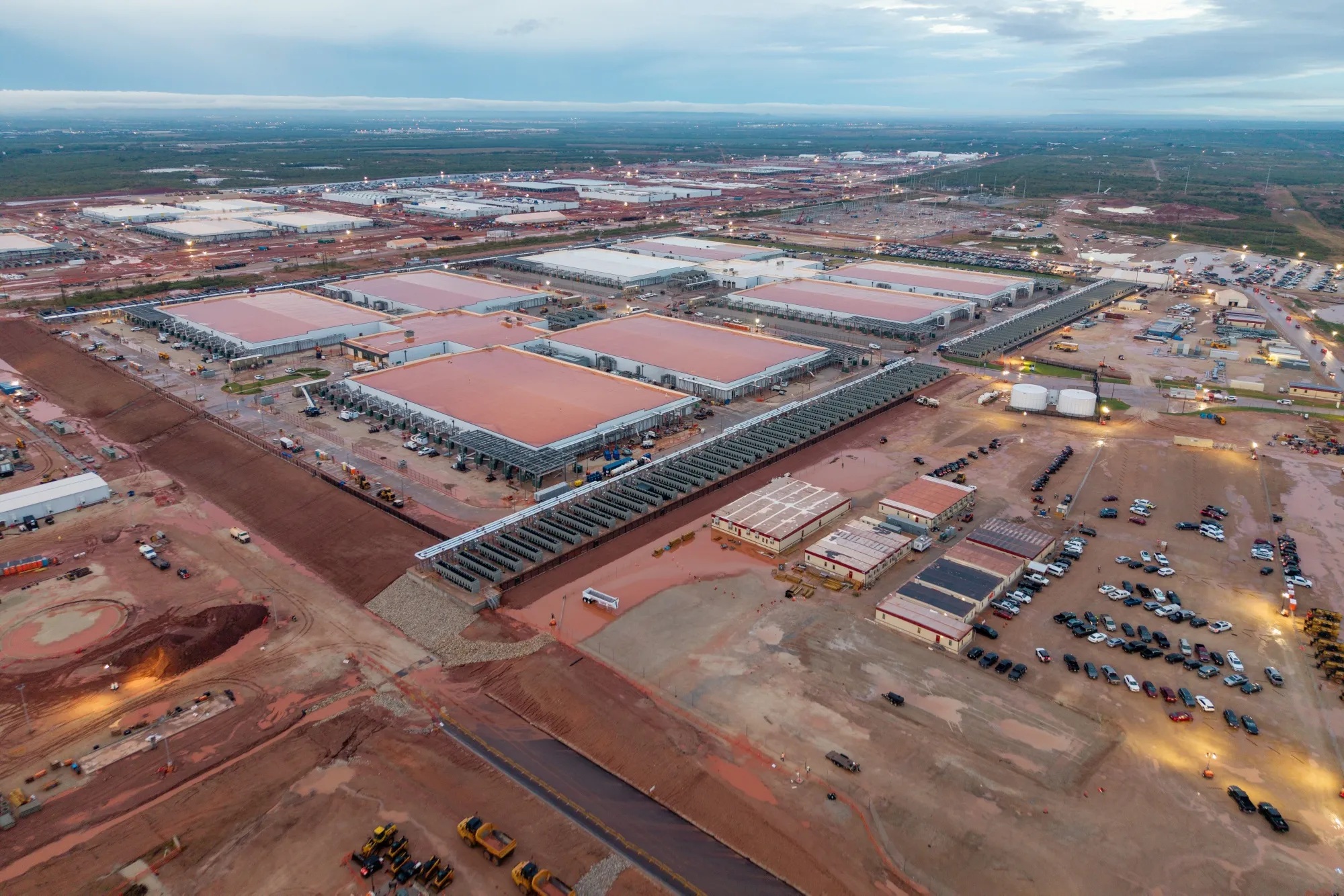
- OpenAI announced Project Camellia on July 22, a 3.2-gigawatt AI data center campus in Effingham County, Georgia, with planned investment above $30 billion.
- The campus spans four buildings on roughly 101 acres inside the 2,600-acre Savannah Gateway Industrial Hub, with construction from 2028 to 2032 and Georgia Power supplying power in phases.
- OpenAI pledged $80 million in local community benefits, up to $71 million in Codex credits for Georgia college and technical students, and an independent annual audit of its commitments.
OpenAI plants its next compute anchor near Savannah
OpenAI on July 22 detailed Project Camellia, a 3.2-gigawatt data center campus near Rincon in Effingham County, Georgia, about 25 miles northwest of Savannah. The company said it will invest more than $30 billion in the complex, which will comprise four buildings on roughly 101 acres within the 2,600-acre Savannah Gateway Industrial Hub, according to reporting from Data Center Dynamics.
Construction is scheduled to begin in 2028 and finish in 2032, with initial operations possible as early as 2028. Power will be delivered by Georgia Power in phases across that window. OpenAI said it will fully fund the electrical infrastructure the site requires so that existing utility customers do not subsidize the project, and that the campus will use a closed-loop cooling system designed to limit water consumption.
| Planned capacity | 3.2 gigawatts |
| Investment | More than $30 billion |
| Footprint | 4 buildings, roughly 101 acres inside a 2,600-acre hub |
| Timeline | Construction 2028 to 2032, power phased in by Georgia Power |
| Community commitments | $80M in local benefits, up to $71M in Codex credits for Georgia students |
The two pledges answer the objections that have slowed data center projects across the country. Water use and electricity cost are the flashpoints in most host communities, and OpenAI addressed both directly, promising a cooling design that recirculates water and a funding structure that keeps the grid upgrade off residents' bills. The site sits inside the Savannah Gateway Industrial Hub, a corridor the state has spent years preparing for large industrial tenants.
The buildout is now measured in gigawatts, not servers
Camellia extends a pattern that has defined OpenAI over the past year: securing power and land at industrial scale to guarantee the compute its models depend on. A single 3.2-gigawatt campus rivals the draw of a mid-sized metro area, and the multiyear, multibuilding structure signals that OpenAI is planning capacity well beyond its current model line. The company has been assembling large sites across several states as part of its broader infrastructure push, and Camellia is among the largest single-location commitments it has disclosed.
The company paired the infrastructure with local commitments aimed at the questions large data centers now routinely face. OpenAI pledged $80 million in community benefits over the life of the project, up to $71 million in Codex credits for eligible college and technical students in Georgia, and an annual publicly available audit by an independent firm to verify that it meets those promises.
Access to power, not model design alone, has become the binding constraint on frontier AI.
For Georgia, the campus continues a run of large technology investments in the Savannah corridor. For OpenAI, it is another marker that the race is now about electricity and land as much as algorithms. The company is committing capital and years to lock down power now, on the assumption that demand for its systems will keep climbing long after the first building comes online.
Santage is committed to independent, transparent journalism. This article is produced in accordance with Santage's Editorial Standards and aims to provide accurate and timely information. Readers are encouraged to verify information independently.