
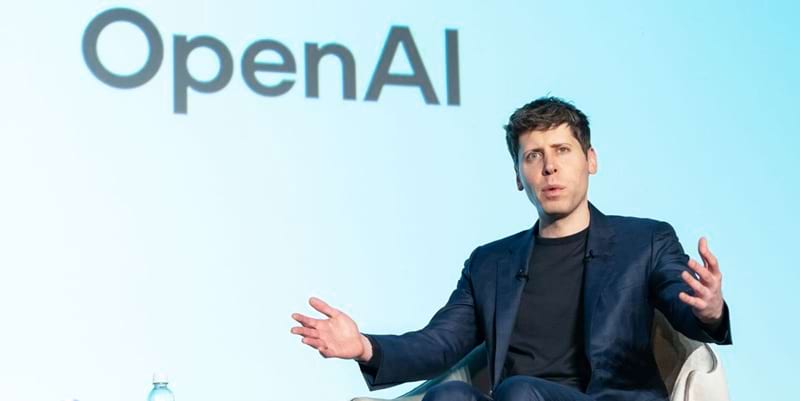
- OpenAI's Deployment Company agreed to acquire Northslope, its second acquisition after Tomoro, adding hundreds of forward deployed engineers who build AI systems inside customer organizations.
- The deployment arm, majority owned and controlled by OpenAI, launched with roughly $4 billion earmarked for acquisitions. Terms of the Northslope deal were not disclosed.
- Northslope's founders come from Palantir, the company that turned forward deployed engineering into a business model, signaling OpenAI is copying the services playbook rather than the software one.
OpenAI's deployment arm makes its second acquisition in months
OpenAI's Deployment Company has agreed to acquire Northslope, an applied AI firm whose engineers embed directly inside client organizations to build and ship AI systems around each customer's real operations. It is the second acquisition for the arm, which follows the earlier purchase of the AI deployment firm Tomoro and began with about $4 billion set aside to fund exactly these kinds of deals.
The target is not technology. It is people. Northslope brings hundreds of forward deployed engineers, a role Palantir pioneered and Northslope's founders carried out of that company. These engineers speak both the technical and the business language, which lets them sit inside a customer, map where AI can actually move a metric, and build the system rather than hand over an API key and a set of documentation. The deal is subject to customary regulatory approval, and OpenAI did not disclose the price.
| Element | Detail |
|---|---|
| Launch capital | Roughly $4 billion earmarked for acquisitions |
| Acquisitions to date | Tomoro (first), Northslope (second) |
| Capacity added | Hundreds of forward deployed engineers |
| Northslope origin | Founded by former Palantir engineers |
| Deal terms | Undisclosed, subject to regulatory approval |
Why OpenAI is paying for engineers instead of shipping another model
For three years the AI race was scored on benchmarks. The company with the strongest model won the quarter. This acquisition is a bet that the scoreboard has changed. Frontier models are now close enough in capability that the differentiator is no longer the model, it is whether a Fortune 500 buyer can turn that model into a working system before the budget cycle closes. Most cannot, which is why so much enterprise AI spend has produced pilots that never reach production.
By buying forward deployed engineering capacity, OpenAI is moving down the value chain into a place software companies usually avoid, the labor intensive work of implementation. It is the same logic that made Palantir a services company wearing a software valuation. OpenAI is choosing lower margin, harder to scale human work because that work is what stands between its models and the revenue locked inside enterprises that have not figured out how to deploy them.
Every lab now has a capable model. The next market goes to whoever can get a business to actually use one.Santage analysis
The move also reframes the competition. Anthropic is winning developers through Claude Code, and Google is selling agents to IT departments through its cloud. OpenAI is answering with something neither leads on, a bench of engineers who will show up and build. In a market where every lab now has a capable model, the company that gets businesses to actually use one may take the market that model quality alone no longer decides.
Santage is committed to independent, transparent journalism. This article is produced in accordance with Santage's Editorial Standards and aims to provide accurate and timely information. Readers are encouraged to verify information independently.