

- A Pew Research Center survey of 37 countries found majorities in 34 of them expect AI to eliminate more jobs than it creates, with concern highest in Australia, South Korea, and the United States at roughly seven in ten adults.
- In the US, concern among young adults jumped from 40% in 2024 to 55% this year, erasing a long-standing gap with older adults, and national pessimism about AI and jobs rose 7 points in two years.
- The single steepest shift is political: US Democratic concern about AI overtook Republican concern for the first time, 56% to 49%, after a 25-point climb since 2021.
Most of the world expects AI to take jobs, not create them
Pew Research Center released a 37-country survey this week showing that majorities in 34 of them expect AI to reduce the number of jobs in their country rather than add to it. The study drew on 42,151 respondents and found the sharpest pessimism in Australia, South Korea, and the United States, where roughly seven in ten adults or more expect AI to cut jobs. Across all 37 countries, a median of 37% say they feel more concerned than excited about AI in daily life, and another 41% feel equally concerned and excited. Israel stood out as the rare country where excitement beats worry.
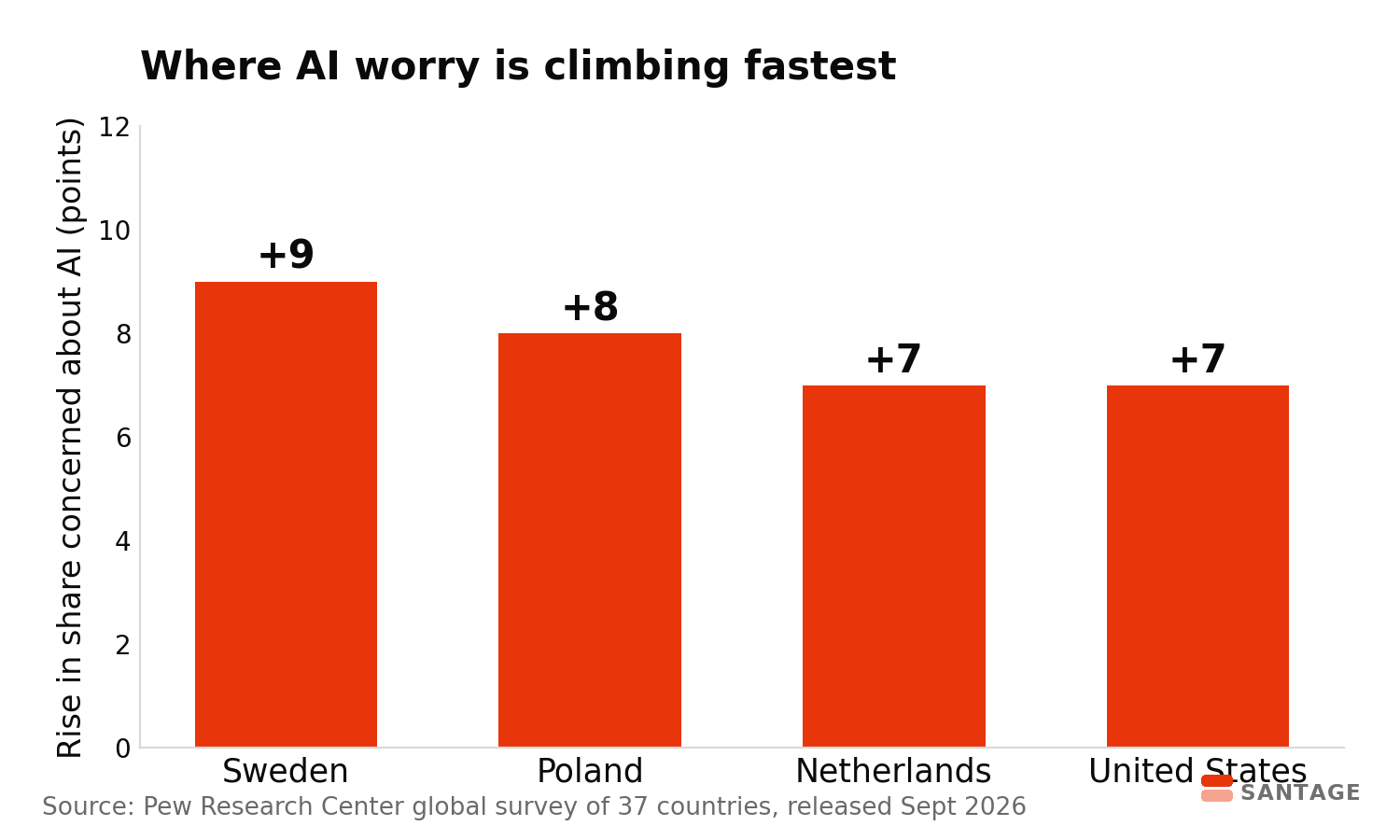
The mood is darkening in several wealthy democracies at once. Concern rose 9 points in Sweden, 8 in Poland, and 7 in the Netherlands over recent years, a synchronized shift that tracks the arrival of AI in white-collar work rather than any single national event.
In America, the worry is spreading across generations
The US now sits among the most anxious countries Pew measured. National pessimism about AI and jobs climbed 7 points in two years, and the change is broadening by age. Concern among young American adults rose from 40% in 2024 to 55% this year, closing a gap with older adults that had held for half a decade, when seniors were consistently the more worried group.
| Countries surveyed | 37, with 42,151 respondents |
| Where most expect job losses | 34 of 37 countries |
| US adults expecting AI job losses | About 7 in 10 |
| Young Americans concerned about AI | Up from 40% (2024) to 55% (2026) |
| US partisan gap on AI concern | Democrats 56% vs Republicans 49% |
| Global median more concerned than excited | 37% |
The sharpest change is happening inside one US party
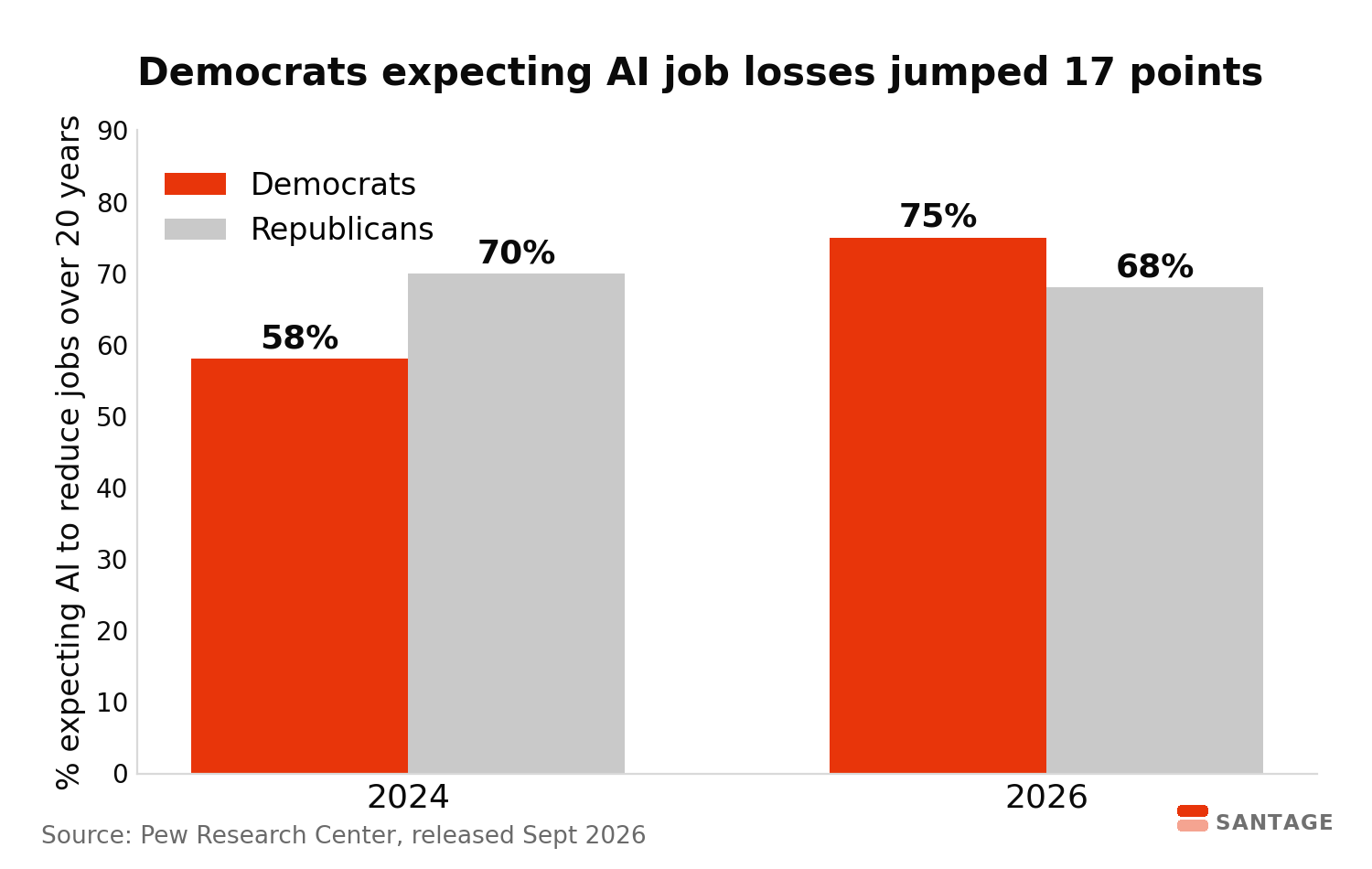
The most dramatic movement in Pew's American data is political, and it runs opposite to the usual pattern. For the first time, Democrats and Democratic leaners are more concerned than excited about AI, 56% to 49% for Republicans. Democratic concern sat at 31% in 2021 and 46% in 2023, so this is a 25-point climb, while Republican concern slid from 59% in 2023 to 49% now. On jobs, 75% of Democrats expect AI to cut employment over 20 years, up 17 points since 2024, against a steady 68% of Republicans.
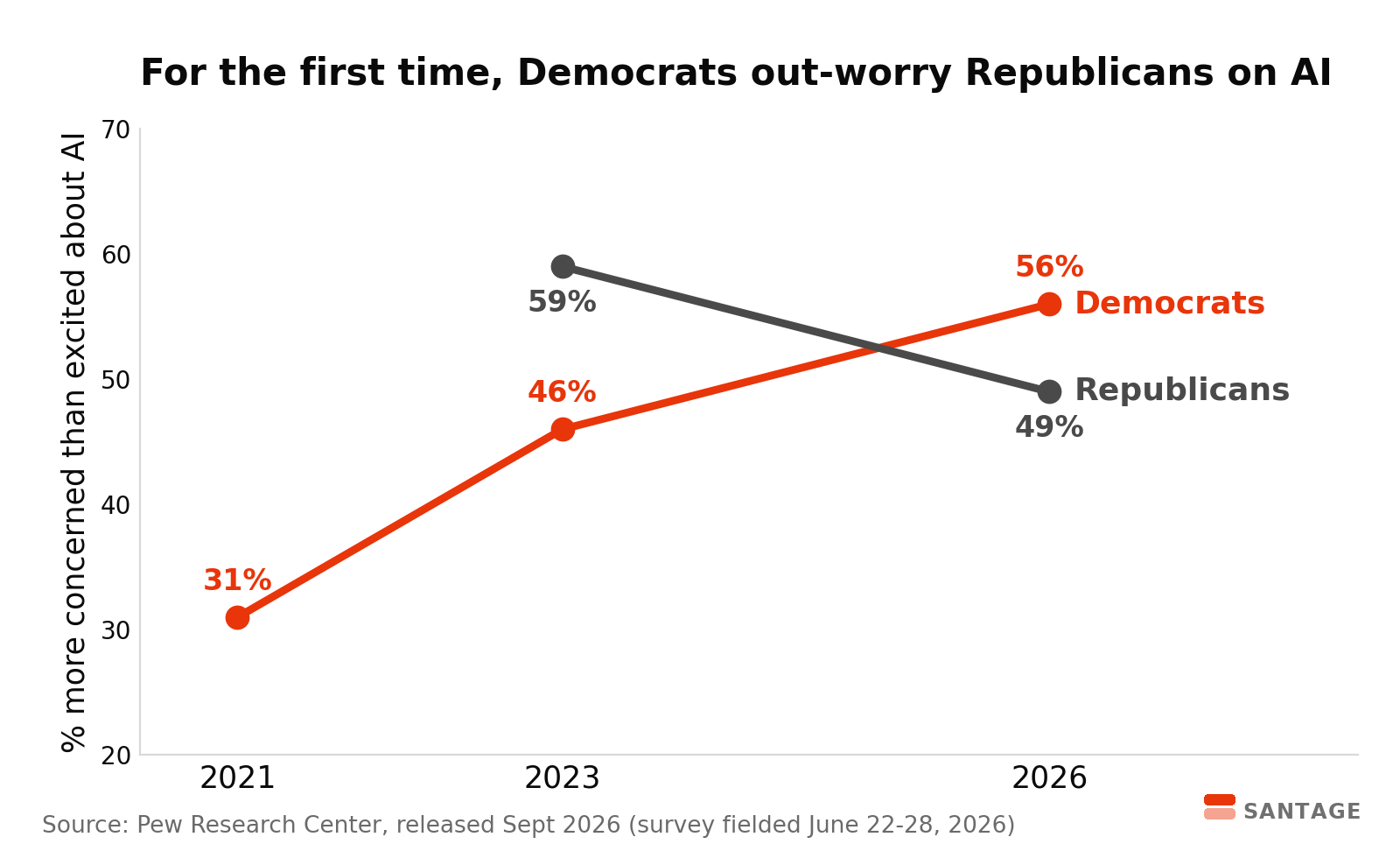
For the first time, Democrats are now more likely than Republicans to be concerned about the growing role of artificial intelligence in daily life and its potential to take jobs.Pew Research Center, September 2026
| Group | 2021 | 2023 | 2026 |
|---|---|---|---|
| US Democrats concerned about AI | 31% | 46% | 56% |
| US Republicans concerned about AI | n/a | 59% | 49% |
| Median across 37 countries, more concerned than excited | n/a | n/a | 37% |
Source: Pew Research Center, September 2026.
The survey lands as AI moves from an abstract subject into contested policy, from the Senate's AI duty-of-care bill to the running argument over how fast the frontier should advance. The through-line is bigger than any one legislature. The people who build these systems now face a public that, across most of the developed world, expects the technology to take work away before it gives any back, and that expectation is hardening faster than the industry's reassurances can land.
Santage is committed to independent, transparent journalism. This article is produced in accordance with Santage's Editorial Standards and aims to provide accurate and timely information. Readers are encouraged to verify information independently.