
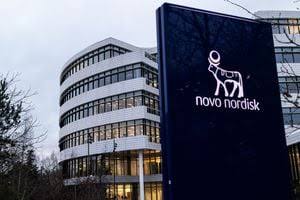
- Novo Nordisk will deploy Anthropic's Claude Science across its research and development workflows, from early target discovery to regulatory writing.
- The maker of Wegovy and Ozempic is the largest pharmaceutical company yet to standardize on a single outside frontier model rather than build the capability in-house.
- CEO Mike Doustdar framed the goal as compressing a drug timeline that typically runs 10 to 15 years from research to a marketed product.
Novo Nordisk standardizes its R&D stack on Claude Science
Novo Nordisk, the Danish maker of the weight-loss drugs Wegovy and Ozempic, will deploy Anthropic's Claude across its research and development organization, the two companies said on September 16. The agreement covers Claude Science, Anthropic's configuration built for scientific work, alongside its frontier models for internal software development. Novo plans to test the system against specific workflows in drug discovery, from early target identification through the documentation that supports regulatory filings.
The company framed the move as a productivity problem rather than a research moonshot. "AI can help us increase productivity in R&D and compress the path from research to marketed product," said chief executive Mike Doustdar in the joint announcement. A new therapy typically takes 10 to 15 years to reach patients, and Novo is under pressure to defend its lead in metabolic disease as rivals close in on its obesity franchise.
Anthropic described the collaboration as an attempt to push Claude further into biological reasoning, the ability to work through the mechanism behind a disease rather than summarize existing literature. Both companies said the work would run under data governance controls and human oversight rather than autonomous decision-making, and no financial terms were disclosed.
| Announced | September 16, 2026 |
| Companies | Novo Nordisk and Anthropic |
| Products | Claude Science, plus frontier models for software development |
| Scope | R&D workflows, from target discovery to regulatory writing |
| Controls | Data governance and human oversight, not autonomous decisions |
| Financial terms | Not disclosed |
| Drug timeline | Typically 10 to 15 years from research to market |
Why a Wegovy maker is buying reasoning instead of building it
The signal is not that a drug company is using AI. It is which layer Novo chose to buy. Large pharmaceutical firms have spent a decade building in-house machine learning teams tuned to their own chemistry and trial data. Standardizing on an external frontier model, and naming the vendor, marks a shift in where the industry now believes the bottleneck sits. Not in proprietary models, but in general reasoning applied to messy scientific work.
By giving leading researchers access to safe, capable, and trusted frontier models, we can shorten research timelines, improve outcomes, and discover medicines.Dario Amodei, Anthropic co-founder and chief executive, via Novo Nordisk
That choice carries a second-order effect. If a company with Novo's data and budget concludes it is faster to rent frontier reasoning than to grow it internally, smaller biotechs have even less reason to build their own. The edge moves from who owns the model to who integrates it most deeply into discovery, and to whichever lab can make its system trustworthy enough to sit inside a regulated pipeline, a point BioPharma Dive noted in its coverage of the deal.
Novo Nordisk did not announce a drug today, or a number it can put in an earnings call. It announced where it believes the next decade of pharmaceutical productivity will be won, and it decided that building the intelligence layer itself was no longer the smarter bet.
Santage is committed to independent, transparent journalism. This article is produced in accordance with Santage's Editorial Standards and aims to provide accurate and timely information. Readers are encouraged to verify information independently.