
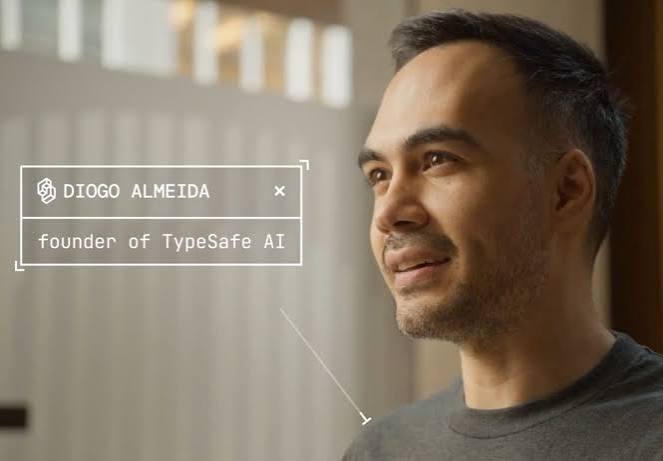
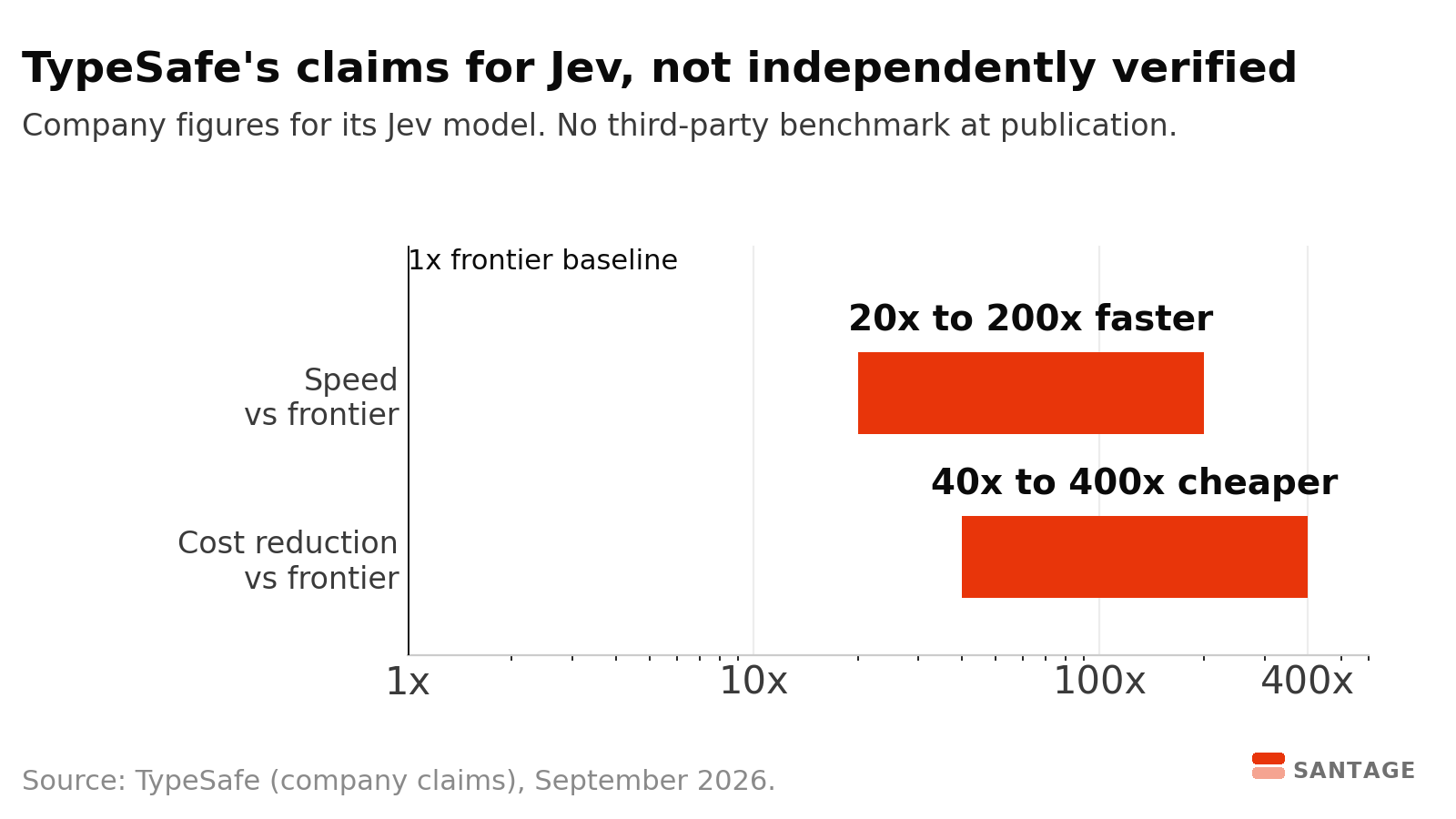
- Diogo Almeida, a co-author of the 2022 InstructGPT paper behind ChatGPT, launched a model called Jev on September 15 with a thread that passed 27 million views, claiming it is 20 to 200 times faster and 40 to 400 times cheaper than frontier models.
- The confirmed facts are narrower: his startup TypeSafe AI raised a $40 million seed led by DCVC, the model targets sub 100 millisecond decisions rather than chat, and no third party has benchmarked the speed or cost claims.
- Jev is pitched as a software component for automated decisions, not a chatbot, a bet that the next value in AI is reliability and latency rather than another conversational model.
A launch thread, not a benchmark, is carrying the story
The loudest AI launch of the week arrived as a post on X. Diogo Almeida, who writes as @CompleteSkeptic, told his followers that after "co-inventing ChatGPT" he spent two years in stealth building a new training method he calls RLCD and a new model, Jev, that is 20 to 200 times faster and 40 to 400 times cheaper, with output tokens free. He called it the shortest path to an AI based economic revolution. The thread crossed 27.8 million views within a day.
Almeida's research pedigree is real and checkable, which is why the claims are getting a hearing rather than a shrug. He is credited as a co-author on the 2022 InstructGPT paper, the work that turned raw language models into instruction followers through reinforcement learning from human feedback, and he is listed among ChatGPT's contributors and on the GPT-4 technical report. When someone from that lineage says the current paradigm is a detour, the industry listens. The co-inventor label is his own framing, and OpenAI has not endorsed it, but the underlying contribution is documented.
What Jev actually claims to be
Strip away the multipliers and Jev is a specific architectural bet. TypeSafe describes it not as a chatbot but as a software component that returns structured decisions with latency below 100 milliseconds, capable of running hundreds of outputs in parallel. The name is a nod to the Jevons paradox, the idea that making a resource cheaper increases total consumption of it. The pitch is that once frontier level inference costs almost nothing per call, companies will wire it into everything that currently waits on a slow, expensive model.
The early demonstration was deliberately odd. TypeSafe showed Jev playing Doom, using the game as a testbed for fast, sequential decisions rather than the long form text that large models are tuned for. That choice underlines the thesis. The company is not trying to write better essays. It is trying to make a model that can sit inside an automated workflow and decide, thousands of times a second, without a human watching.
The verifiable core is a $40 million seed, not a revolution
The claims that can be confirmed today are corporate, not technical. TypeSafe AI, founded in 2024 in San Francisco by Almeida with co-founders Erik Gafni and Sasha Sheng, raised a $40 million seed round led by DCVC. Jev is available only through an early access waitlist. There is no public benchmark, no third party evaluation, and no customer running it in production that the company has named.
| 2024 | Founded, San Francisco |
| $40M | Seed round, led by DCVC |
| Under 100ms | Target decision latency |
| Waitlist | Jev access, early access only |
| None | Independent benchmarks at launch |
| TypeSafe's claim | What it means | Verification status |
|---|---|---|
| 20 to 200x faster | Versus frontier models on decision tasks | Company figure, no independent benchmark |
| 40 to 400x cheaper, output tokens free | Cost per decision at scale | Company figure, unverified |
| Sub 100ms, frontier level intelligence | Real time automated decisions | Shown in a Doom demo, not third party tested |
| Co-invented ChatGPT | Founder's own description | Co-authored InstructGPT and the GPT-4 report, credited ChatGPT contributor |
Why the claim is plausible and still unproven
Extraordinary speed and cost numbers are not automatically fantasy. A model purpose built for narrow, structured decisions can legitimately be orders of magnitude faster and cheaper than a general reasoning model asked to do the same job, because it is not carrying the weight of open ended conversation. The honest reading is that the claims are directionally believable for a specialized system and meaningless until someone outside TypeSafe measures them on a public task with a stated baseline. A range as wide as 20 to 200x is itself a tell that the number depends heavily on which comparison you pick.
The pattern is familiar. This is the second high profile launch this month built on a founder's reputation ahead of a public product, after Mira Murati's Thinking Machines raised at a cut valuation. Pedigree is opening doors that a benchmark used to open, and the market is funding the thesis before the evidence arrives.
TypeSafe may be right that the industry over invested in conversation and under invested in cheap, reliable decisions. That is a serious argument from a serious researcher. It is also, for now, an argument, delivered in a thread that went viral on the strength of a name and a number no one else has been able to check.
Santage is committed to independent, transparent journalism. This article is produced in accordance with Santage's Editorial Standards and aims to provide accurate and timely information. Readers are encouraged to verify information independently.