
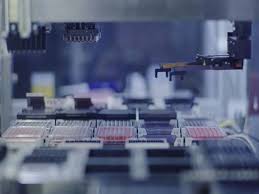
- Anthropic released a research preview of the Model Hardware Standard (MHS), a shared specification that lets Claude agents operate physical instruments such as microscopes, liquid handlers, and robotic arms.
- The standard already runs machines for drug discovery and quantum computer calibration, operating for long stretches and recovering from hardware faults with little human help. Anthropic plans to open-source it after safety work with partners.
- MHS is the same standard-setting move Anthropic made with the Model Context Protocol in 2024, aimed this time at the physical world. Whoever defines the interface everyone builds against controls the layer.
What Anthropic just plugged Claude into
Anthropic released a research preview of the Model Hardware Standard, a shared specification that lets its Claude agents operate physical laboratory and manufacturing instruments directly. In the company's description, the standard already drives microscopes, liquid handlers, and robotic arms across tasks that range from drug discovery to calibrating the lasers inside quantum computers, running for long stretches and recovering from hardware faults with little human intervention.
The preview is open to an initial group of partners across science, robotics, electronics, and manufacturing, including biotech, robotics, and quantum-computing firms. Anthropic says it will open-source the standard once it has worked through safety evaluations and operating practices with those partners. Alongside the release, the company expanded its AI for Science program beyond biology and offered 10,000 free Claude subscriptions to researchers.
| Spec | a shared standard for AI agents to safely operate physical devices |
| Instruments | microscopes, liquid handlers, robotic arms |
| Domains | drug discovery, quantum computer calibration, electronics, manufacturing |
| Claimed benefits | faster device integration, faster iteration, real-time fault detection |
| Rollout | research preview now, open-source release planned after safety work |
| For scientists | 10,000 free Claude subscriptions and a wider AI for Science program |
MHS reduces the time it takes to integrate devices, makes it possible to iterate faster in a variety of experimental settings, and assists with the live operation of machines and real-time fault detection.Anthropic, Model Hardware Standard research preview, August 2026
Anthropic introduced the standard on its own channels, framing it as the next step for agents that act in the world rather than only in software.
This is the MCP playbook, aimed at the physical world
To see why this matters, look at what Anthropic did two years ago. In November 2024 it published the Model Context Protocol, an open standard for connecting AI models to software tools and data sources. MCP won adoption because it was a shared plug. Instead of every company wiring its AI to every app by hand, they wrote to one spec, and it has since become common infrastructure across the industry, most recently through its largest stateless update.
MHS is the same move pointed at hardware. Rather than each lab building a one-off bridge between an AI agent and its particular microscope or robot, they write to a single specification. The prize is the same as it was with MCP. Whoever defines the interface that everyone else builds against sits at the center of the ecosystem, whether or not they own any of the machines on either end.
| Dimension | Model Context Protocol (2024) | Model Hardware Standard (2026) |
|---|---|---|
| Connects agents to | software tools, data, APIs | physical instruments and machines |
| Typical action | fetch data, call a service | move a robot arm, run a microscope |
| Failure looks like | a wrong answer or bad tool call | a damaged sample or an unsafe machine state |
| Status | open standard, broadly adopted | research preview, open-source planned |
Source: Anthropic; Santage analysis, August 2026.
MCP decided how AI talks to software. The Model Hardware Standard is Anthropic's bid to decide how AI talks to the physical world, before anyone else sets that default.
Why the interface layer is the real prize
The immediate value is speed in the lab. A drug-discovery team that once wrote custom code to link an agent to each instrument can, in Anthropic's telling, connect them through one standard and let Claude run experiments around the clock, catching and recovering from faults as it goes. That turns a model from an assistant that suggests experiments into a system that runs them.
The strategic value is larger. Physical AI, the effort to push models out of the chat window and into machines, is where much of the next wave of AI companies is being built, from robotics startups to automated labs. If the standard those machines speak is Anthropic's, then Claude is the model best positioned to operate them, the safety framework is Anthropic's framework, and rivals arrive to a layer that has already been defined. That is the same position MCP handed Anthropic in software, and it echoes the wider fight over who controls agent protocols.
The risk is that the failures are physical
A wrong output from a chatbot is a nuisance. A wrong action from an agent holding a robotic arm, a chemical dispenser, or a laser is a different category of problem. Anthropic has framed MHS around safety from the start, keeping it in preview, limiting it to vetted partners, and holding back the open-source release until it has worked through evaluations. Skeptics of physical AI will note that those are exactly the guardrails that tend to loosen once a standard is racing for adoption, a tension that already shapes the governance of AI agents.
For now MHS is a preview with a short list of partners, not a shipping product. But the direction is clear, and it is consistent with everything Anthropic has said about where agents go next. Having taught models to use software, the labs are now teaching them to use machines, and Anthropic wants to write the manual.
Santage is committed to independent, transparent journalism. This article is produced in accordance with Santage's Editorial Standards and aims to provide accurate and timely information. Readers are encouraged to verify information independently.