
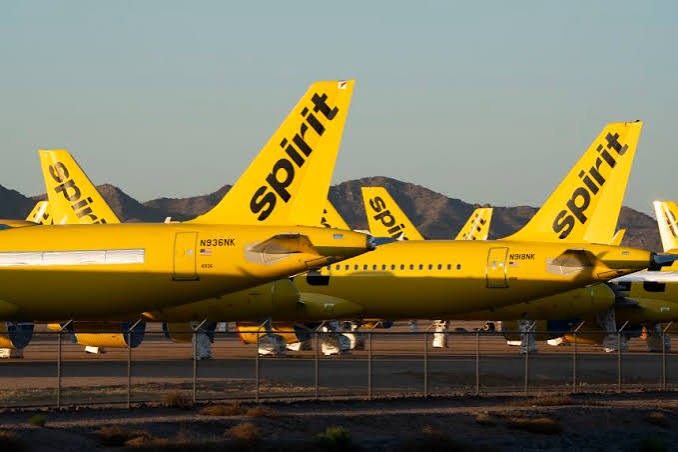
- Google paid $10 million at Spirit Airlines' bankruptcy auction for an enterprise dataset that includes more than 100 million employee emails, hundreds of millions of Microsoft Teams messages, and pricing data from roughly 7 billion competitor flights.
- Google says the data will be scrubbed of personally identifiable information by a third party before it arrives, and that passenger profiles and loyalty records are excluded from the sale.
- The deal turns a defunct airline's internal records into AI training material and prices nearly two decades of a real company's operational history at about the cost of one senior engineer.
What ten million dollars bought from a defunct airline
Spirit Airlines stopped flying in 2026 after years of losses, and in bankruptcy its data became an asset to be auctioned like gates or aircraft. Google won that auction, paying $10 million for a slice of the airline's internal records and, according to reporting from CNN, outbidding the data-labeling firm Mercor.
The dataset is unusually broad. It spans more than 100 million employee emails, hundreds of millions of Microsoft Teams messages, over 30 million lines of internal code, pricing data drawn from about 7 billion competitor flights, and roughly 7.5 billion passenger transaction records reaching back nearly two decades. It also carries operations, revenue, HR, marketing, audit, and fraud records, the day-to-day exhaust of running an airline.
We acquired part of an enterprise dataset from Spirit Airlines, which can be helpful in improving our products and AI models.Google, on the Spirit Airlines data purchase
Google said the dataset will be "rigorously scrubbed of any personally identifiable information by a third party" before it receives the files, and that passenger profiles and loyalty program information were left out of the sale.
| Dataset component | Approximate volume |
|---|---|
| Employee emails | 100 million and up |
| Microsoft Teams messages | Hundreds of millions |
| Lines of internal code | 30 million and up |
| Competitor flights priced | About 7 billion |
| Passenger transaction records | About 7.5 billion, nearly 20 years |
| Price paid by Google | $10 million |
Why a bankrupt company's inbox is now an AI asset
The number worth sitting with is not 7.5 billion. It is 10 million dollars. A frontier lab paid roughly the cost of a single senior researcher for two decades of how a real business actually priced tickets, negotiated, staffed, and audited itself. That is the kind of operational data the public web does not contain, and it is exactly what large models run short of once they have ingested everything freely available online. Bankruptcy is what makes it purchasable: a living company would never sell its email archive, but a dead one has creditors to repay and no reputation left to protect, which turns its most sensitive records into inventory.
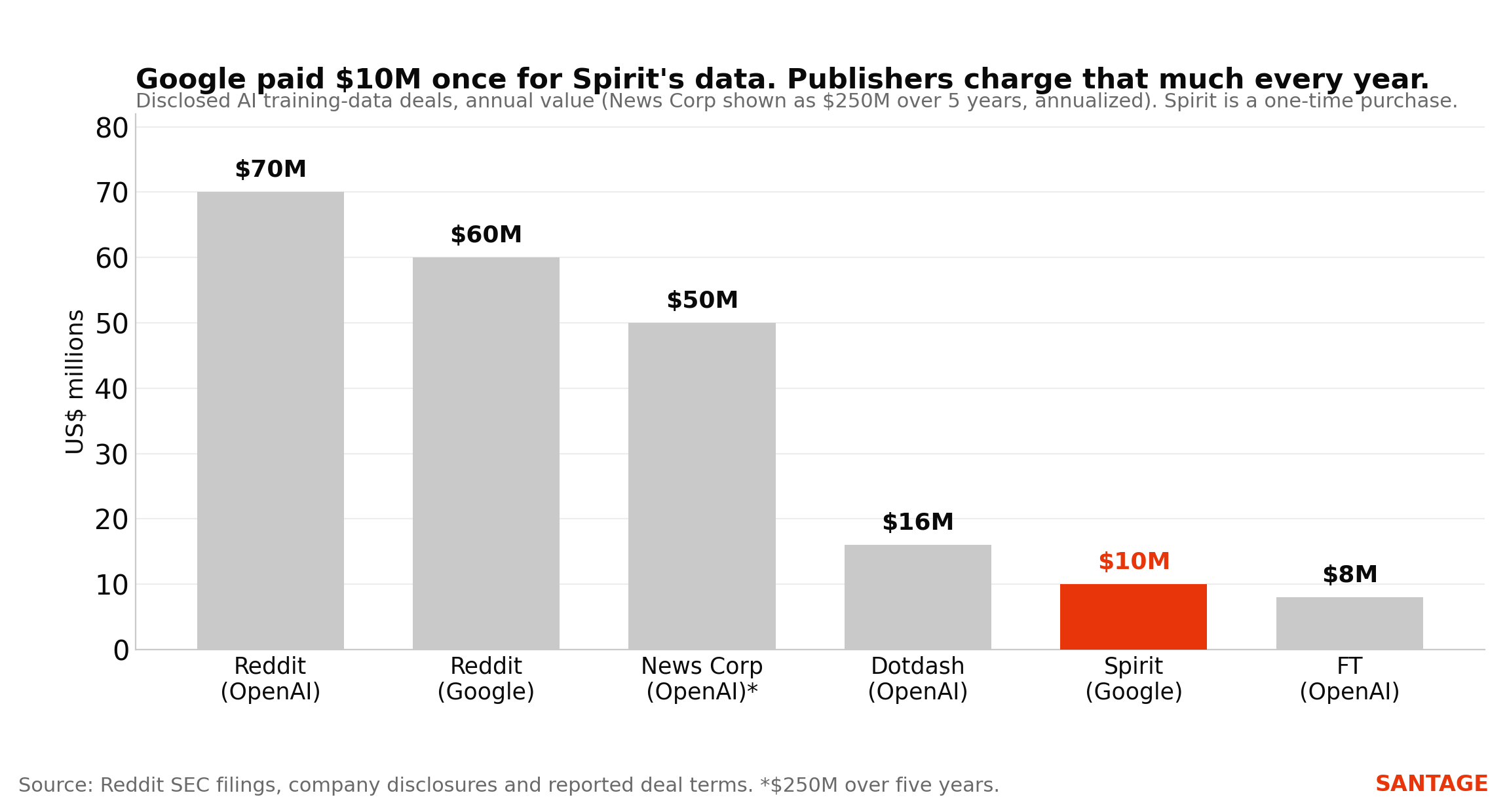
The price also looks like a bargain next to what data now costs on the open market. OpenAI pays News Corp about $250 million over five years, and Reddit charges Google roughly $60 million a year for the same firehose it licenses to OpenAI for about $70 million. Against those recurring bills, a permanent copy of an entire airline's operational history for a one-time $10 million is one of the cheapest large datasets a major lab has bought.
The privacy promise deserves scrutiny. Stripping identifiers from structured pricing tables is straightforward. Doing the same across 100 million emails and hundreds of millions of chat messages, written by named people about named colleagues and customers, is far harder, and de-identification of free text has a long record of leaking the very details it is meant to remove. Google has moved the risk to a third party and a verb, "scrubbed," that is doing a great deal of work.
For everyone else, the signal is that proprietary data is becoming a moat you can now buy at a distressed-asset discount. As the open web dries up as a training source, the scarce input is real institutional behavior, and the companies with the deepest pockets are the ones positioned to acquire it when a competitor, or an unrelated business, collapses.
Santage is committed to independent, transparent journalism. This article is produced in accordance with Santage's Editorial Standards and aims to provide accurate and timely information. Readers are encouraged to verify information independently.