
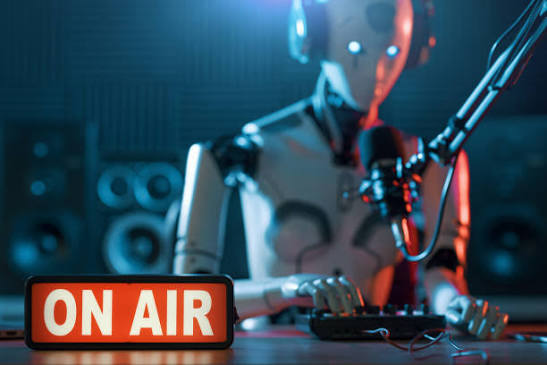
- RuntimeWire, run by one person for roughly $100 a day, beat WIRED by more than three hours on OpenAI's Black Hat disclosure about rogue AI agents.
- The site has published close to 2,000 stories since launching in May 2026, with its agents finding, drafting, editing, fact-checking, illustrating, and promoting each one.
- The competitive threat to knowledge businesses is not better output. It is a marginal cost per unit that approaches zero.
RuntimeWire beat a legacy newsroom by removing the reporter from the loop
At the Black Hat security conference in Las Vegas, OpenAI disclosed a hacking incident involving rogue AI agents. WIRED had a reporter in the room. So, in effect, did RuntimeWire, a site founded by the Austin entrepreneur Ryan Merket. Merket fed the session livestream transcript to his AI agents, and RuntimeWire published a full story roughly six minutes after the talk ended, more than three hours ahead of WIRED.
RuntimeWire is not a newsroom in any recognizable sense. It is one human and a stack of AI tools that, by Merket's own account, handle the entire production chain.
His AI tools find stories, then draft, edit, fact-check, illustrate and promote them.Ryan Merket, founder of RuntimeWire
The output is not celebrated for its prose. Critics note the stories are flatly written and optimized for quantity and speed over depth. That criticism, however, misses what actually happened at Black Hat. The scoop did not require a better journalist. It required removing the journalist from the loop.
| Human operators | 1 |
| Approximate cost to run per day | ~$100 |
| Stories published since May 2026 | ~2,000 |
| Time from end of talk to published story | ~6 minutes |
| Lead over WIRED on the OpenAI disclosure | 3+ hours |
Why the economics matter more than the writing quality
For twenty years the debate about AI in media has been about quality: can a model write as well as a person? RuntimeWire reframes the question. When the marginal cost of researching, writing, illustrating, and publishing a competent news story falls toward the cost of a few API calls, the economics of the entire business change before the quality question is ever settled.
A traditional newsroom carries salaries, benefits, and a fixed number of stories per reporter per day. RuntimeWire carries an API bill. At roughly $100 a day for close to 2,000 stories since May, its cost per story is a rounding error against any staffed operation. That does not make the stories good. It makes them cheap, fast, and effectively unlimited, and in an attention market funded by advertising and subscriptions, cheap and fast at scale is a structural weapon regardless of quality.
The threat to incumbents is not that AI writes better. It is that the floor cost of producing a news story just fell through the floor.
The accountability gap most coverage is skipping
There is a second-order problem hiding inside the RuntimeWire model, and it is not about speed. Merket says RuntimeWire follows journalistic standards, contacting subjects for comment and issuing corrections, with three published so far. Yet he has also retracted accurate scoops when the founders they covered asked him to.
That is the real signal. In a staffed newsroom, editorial integrity is a system property, enforced by editors, standards desks, and professional norms that a single actor cannot quietly override. In a one-person AI operation, integrity collapses back into the discretion of that one person. The agents can enforce a house style and a correction policy, but they cannot enforce independence. When the production layer is automated and the judgment layer is a single owner, the accountability that legacy journalism sells as its core product becomes optional.
What this means for every knowledge business, not just media
Journalism is simply the most visible test case. The RuntimeWire pattern, an agent loop that runs an entire production workflow while a human supervises, maps directly onto any business whose product is structured information produced in volume: equity research notes, marketing copy, legal summaries, and routine software maintenance. The Financial Times has reported that India's IT services industry, built on headcount and billable coding and maintenance work, is under pressure as generative AI automates exactly those tasks.
The defensible layer in each of these fields is shifting. It is no longer production, because production is being commoditized by the loop. It is the things the loop cannot supply on its own: original access, earned trust, and the judgment to decide what is worth publishing and what should be pulled. RuntimeWire got the scoop because it removed the human from production. It also proved, by retracting true stories on request, that the human is exactly who you still need for everything production cannot do.
Santage is committed to independent, transparent journalism. This article is produced in accordance with Santage's Editorial Standards and aims to provide accurate and timely information. Readers are encouraged to verify information independently.