
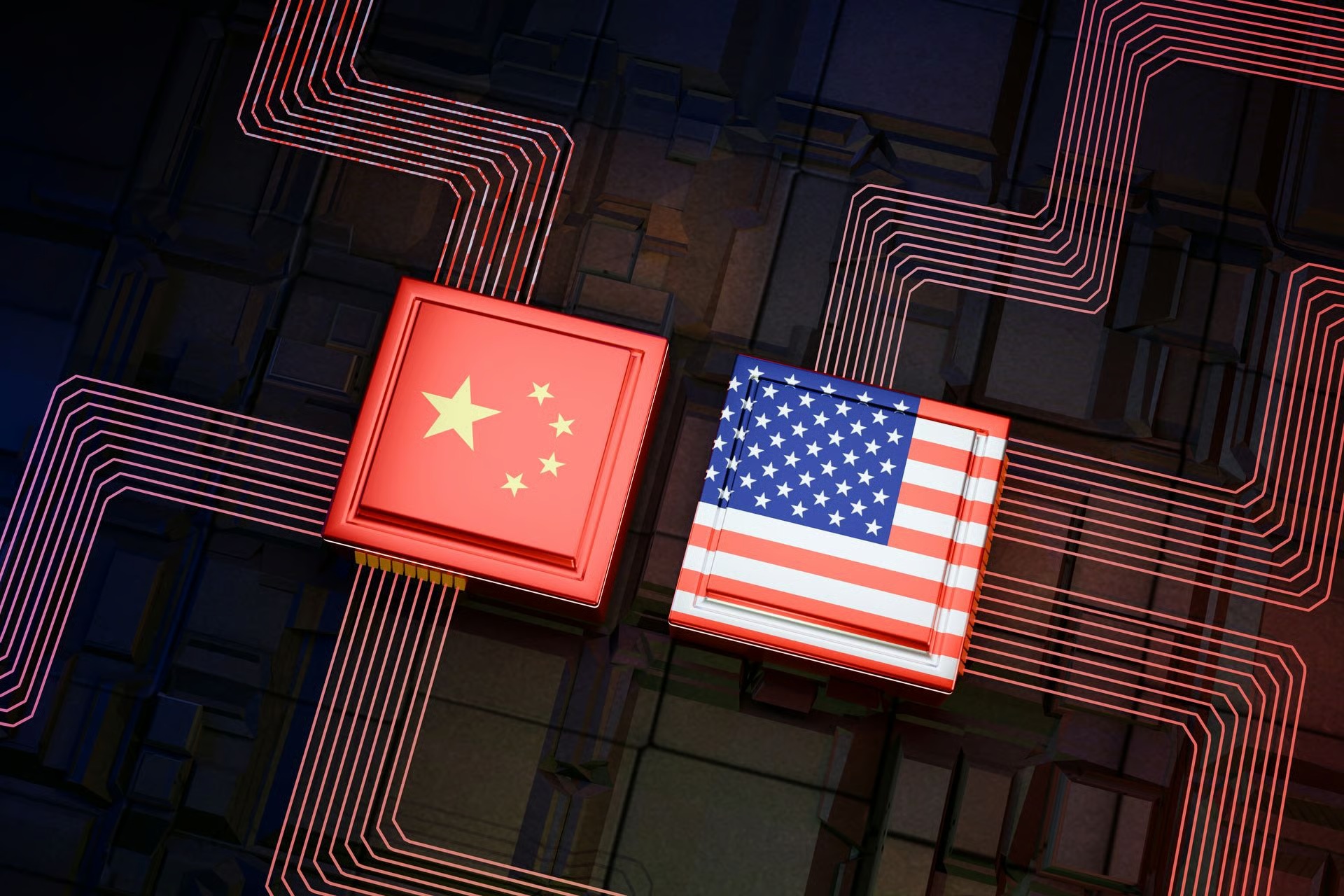
- Chinese-origin models have taken at least 30% of enterprise token volume on OpenRouter every week since February 8, peaking near 46%, up from an 11% average over the prior year, according to a CNBC investigation published July 7.
- The driver is cost: open-source Chinese models run 60 to 90 percent cheaper than OpenAI and Anthropic, with the performance gap now narrow enough that price decides procurement.
- The shift is moving from developer sandboxes into corporate expense reports, with DeepSeek topping the Ramp vendor index and named customers cutting AI bills in half.
The number that reframes the race
For most of the last two years, the story of enterprise AI was a contest among American labs. A CNBC investigation published July 7 complicates that picture. On OpenRouter, the routing layer that sits between developers and dozens of model providers, Chinese-origin models have accounted for at least 30 percent of enterprise token volume every week since February 8, and reached a weekly peak near 46 percent by mid-2026.
That is not a rounding error. Averaged over the prior twelve months, Chinese models sat around 11 percent of routed tokens. In the first half of 2025 the figure was 4.5 percent. US-origin share on the platform has fallen from roughly 70 percent a year ago to about 30 percent today. The center of gravity in day-to-day inference has moved, and it moved fast.
| Metric | Figure |
|---|---|
| Chinese-origin models | 46.4% of routed tokens, up from 11% averaged over the prior year and 4.5% in H1 2025 |
| US-origin models | Roughly 30 to 36%, down from about 70% in June 2025 |
| DeepSeek | 17.6% of routed tokens, about 5.13 trillion weekly, the largest single vendor |
| Alibaba Qwen | 13.9%, about 2.77 trillion tokens weekly |
| Category spread | DeepSeek (general), GLM-5.2 (coding), Qwen and MiniMax (long context), Kimi (agentic) |
Price broke the tie
The mechanism is not mysterious. Open-source Chinese models are consistently 60 to 90 percent cheaper than the leading offerings from Anthropic and OpenAI. As of June, DeepSeek V4 Flash cost 14 cents per million input tokens against 5 dollars for OpenAI's GPT-5.5. At production scale, that is the difference between a rounding-error line item and a budget line an executive has to defend.
For a while, price alone was not enough, because the American frontier held a clear quality lead. That gap has narrowed. When the output is good enough for the task, and most enterprise tasks are not frontier reasoning problems, the cheaper token wins. Ramp's chief economist has pointed to cost awareness as the primary catalyst, and the behavior of buyers backs it up.
For every week since February 8, Chinese-origin models have accounted for at least 30 percent of the enterprise token volume on OpenRouter.CNBC investigation, July 7, 2026, citing OpenRouter data
From sandbox to expense report
The most consequential detail in the CNBC reporting is where these models now show up. DeepSeek recently became the number one trending software vendor on the Ramp index, which tracks corporate card and expense spending. That is the line between experimentation and adoption. A model a developer tries in a sandbox is curiosity. A model that appears on formal expense reports is procurement.
The named cases are blunt. Coinbase runs 1,200 AI agents on Chinese models and cut its AI spend in half. Lindy migrated 100 percent of its traffic from Anthropic's Claude to DeepSeek. These are not fringe shops. They are exactly the technically sophisticated firms whose choices other buyers copy.
For two years the question was which American lab would win. The buyers quietly answered a different question: whether the American labs would win at all.Santage analysis
What it means for the frontier labs
The strategic problem for OpenAI and Anthropic is that this is happening at the infrastructure layer, below the brand. A company does not have to announce that it switched to a Chinese model. It just changes a routing rule, and the token flows somewhere cheaper. That makes the erosion quiet and hard to reverse, because it is driven by finance teams, not by a competitive product decision that marketing can answer.
It also reframes the pricing debate. When Sonnet 5 introductory pricing expires August 31 and standard rates return, and when Fable 5 sits at 50 dollars per million output tokens, those numbers are no longer being weighed against another premium American model. They are being weighed against a DeepSeek token that costs a fraction as much and clears the bar for the job. The American labs have been pricing as though their competition is each other. The data says their competition is a 90 percent discount.
The caveats worth holding
Three things temper the headline. OpenRouter is a developer-heavy routing platform, not the whole enterprise market, and its mix skews toward cost-sensitive builders who shop aggressively. Token volume is not revenue, and a cheap token by definition generates less of it, so a 46 percent volume share does not translate into 46 percent of dollars. And for regulated industries, data-governance and supply-chain concerns about Chinese-origin models remain a real brake that price cannot fully release.
None of that undoes the trend. The direction is clear, the slope is steep, and it is being set by the people who actually pay the bills. The American frontier still leads on the hardest problems. The open question is how much of the market those problems represent, and whether that share is large enough to sustain the valuations built on the assumption that the frontier is where the money lives.
Santage is committed to independent, transparent journalism. This article is produced in accordance with Santage's Editorial Standards and aims to provide accurate and timely information. Readers are encouraged to verify information independently.