
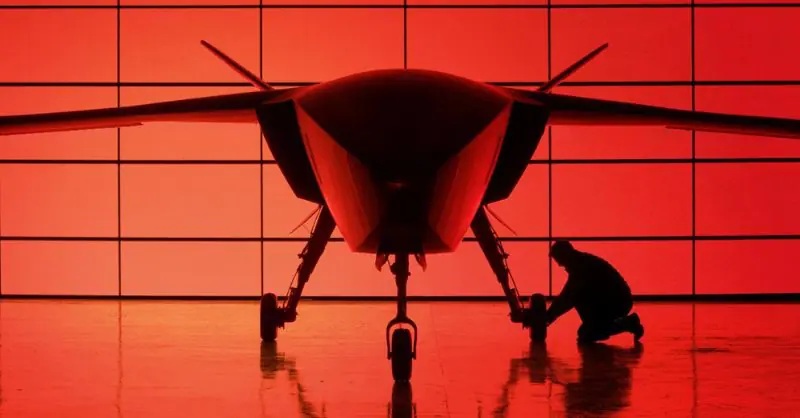
- Helsing raised $1.8 billion in a Series E at an $18 billion post-money valuation, the largest venture financing ever recorded for a European defense-technology startup.
- The company was founded in 2021, reaching an $18 billion valuation in roughly five years while building drones, underwater surveillance systems, and the autonomous AI software that runs them.
- Investor demand exceeded the available allocation, and the company remained predominantly European-owned, a structure that signals sovereignty capital rather than pure financial return-seeking.
An $18 billion valuation built in five years on autonomous military software
Helsing closed a $1.8 billion Series E on July 13 at an $18 billion post-money valuation, the largest venture financing ever raised by a European defense-technology company. According to the company's press release, the round drew new and existing investors including Dragoneer Investment Group, Lightspeed Venture Partners, Growth Equity at Goldman Sachs Alternatives, JPMorganChase, the Canada Pension Plan Investment Board, General Catalyst, Plural, and Stepstone.
| Metric | Detail |
|---|---|
| Amount raised | $1.8 billion |
| Post-money valuation | $18 billion |
| Founded | 2021 |
| Ownership after round | Predominantly European |
| Demand | Exceeded available allocation |
The company was direct about what the oversubscription meant.
Investor demand significantly exceeded the available allocation, reflecting strong and growing confidence in AI-driven and software-defined defence technology.Helsing, Series E announcement
That detail matters more than the headline number. Oversubscription at an $18 billion valuation tells you the constraint in this market is access to the deal, not appetite for the risk. Helsing is not a model lab. It builds a hardware and software platform for defense, spanning strike drones and underwater surveillance craft, and it develops the artificial intelligence and autonomous control software that make those systems operate without constant human direction. The company's board is co-chaired by Spotify founder Daniel Ek and former Airbus chief executive Tom Enders, with former NATO commander Denis Mercier among its members, a roster that pairs consumer-technology capital with defense-industrial credibility.
Why European defense AI became the continent's fastest capital magnet
The Helsing round did not happen in isolation. In the same week, the German autonomous-drone maker Quantum Systems raised $1.2 billion at a valuation near $8 billion, as reported by CNBC. Two ten-figure European defense rounds inside a single week is not a coincidence. It is a capital reallocation.
The driver is sovereignty. European governments spent two decades treating defense procurement as a slow, incumbent-dominated process, and treating advanced autonomy as something to buy from American suppliers when needed. That assumption has collapsed. The continent now wants domestically controlled autonomous capability, and it wants it fast enough that venture-scale companies, not just legacy primes, are being funded to deliver it. The predominantly European ownership of Helsing after a $1.8 billion raise is the clearest evidence. When a company can raise that much and keep its cap table on the continent, the capital is being steered by strategic intent, not only by expected returns.
For AI specifically, this is where autonomy graduates from demonstrations to procurement. A strike drone that identifies and prioritizes targets, or an underwater system that patrols without a tether to a human operator, is an applied autonomy problem of exactly the kind that consumer and enterprise AI has spent years rehearsing in lower-stakes settings. Defense is now paying frontier prices for it.
What shifts when defense autonomy clears an $18 billion valuation
An $18 billion private valuation resets the reference points for an entire category. It gives European founders a credible ceiling to raise toward, it gives American defense-AI companies a competitor with deep reserves and home-market political backing, and it gives limited partners a data point that reprices the whole sector upward. Talent follows valuations, and a company able to raise $1.8 billion in an oversubscribed round can outbid most rivals for the autonomy and robotics engineers this work requires.
There is a second-order effect that will outlast the funding cycle. Defense autonomy funded at this scale creates dual-use pressure in both directions. Techniques proven under military constraints, in perception, in real-time decision-making under adversarial conditions, in operating without cloud connectivity, are precisely the capabilities that civilian robotics and industrial autonomy still struggle with. The capital entering European defense AI is buying progress on problems that reach well beyond the battlefield, whether or not that diffusion is intended.
The number most coverage is missing
The valuation is the headline, but the oversubscription is the signal. A $1.8 billion round that could have been larger, closed at $18 billion, held predominantly by European investors, describes a market where strategic buyers are competing to get in rather than founders competing to raise. That is the inverse of how most of the AI funding boom has worked, where capital chases a scarce set of frontier labs. In European defense, demand for exposure now exceeds the supply of fundable companies, and that imbalance is what pulls valuations to record highs.
Helsing's raise is not a story about one company's momentum. It is the clearest price signal yet that Europe has decided autonomous defense capability is a sovereign priority worth funding at frontier-AI valuations, and that the money is now moving faster than the companies can absorb it.
Santage is committed to independent, transparent journalism. This article is produced in accordance with Santage's Editorial Standards and aims to provide accurate and timely information. Readers are encouraged to verify information independently.