
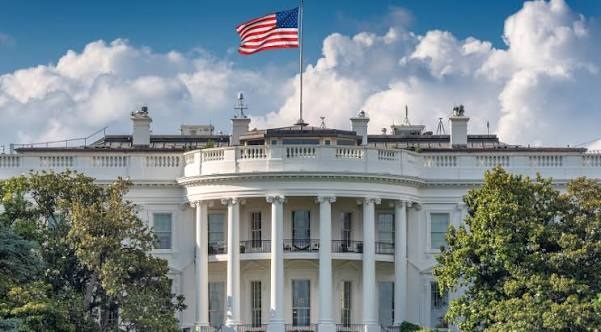
- The White House is in advanced talks with AI companies to finalize voluntary standards for frontier model releases, with an announcement possible the week of July 7.
- The June 2 executive order requires the framework by August 1 and offers the government early access to frontier models for up to 30 days before release.
- GPT-5.6 remains restricted to roughly 20 government-cleared companies, and its broad release now depends on the framework's final terms.
August 1 is the deadline that now governs frontier AI releases
The Trump administration's June 2 executive order, Promoting Advanced Artificial Intelligence Innovation and Security, directed federal agencies to design a voluntary framework for frontier model developers by August 1, according to the White House. Under the framework, participating developers may give agencies access to covered models for up to 30 days before release, collaborate on cybersecurity testing, and coordinate through a new Treasury-led AI cybersecurity clearinghouse.
The order is explicit that participation is voluntary and that preclearance of models is prohibited. On paper, no lab must show Washington anything before shipping.
The Financial Times reported on July 2 that talks between the White House and AI companies are in their final stages, with an announcement possible as soon as the week of July 7. The same reporting notes the framework will define the conditions under which OpenAI's GPT-5.6 can move from its current restricted release to broad availability. A voluntary program is about to determine the commercial fate of the most capable model on the market.
Three frontier releases in five weeks already ran through Washington
The framework is not arriving into a vacuum. It is formalizing behavior that already exists.
| Date | Event |
|---|---|
| June 12 | US export controls suspend Claude Fable 5 over a cybersecurity jailbreak |
| June 26 | OpenAI launches GPT-5.6 Sol restricted to roughly 20 government-cleared companies |
| July 1 | Anthropic restores Fable 5 globally with a safety classifier co-developed with the government |
| August 1 | Executive order deadline for the finalized voluntary framework |
Every consequential frontier release since early June has involved government participation before or during deployment. Anthropic rebuilt Fable 5's safeguards with federal input as the price of restoration. OpenAI launched its strongest model directly into a government-mediated access list. Neither company was legally compelled to do either. Both understood that shipping without Washington's comfort now carries a tail risk, measured in suspended revenue and grounded models, that no general counsel will accept.
Voluntary on paper, mandatory in practice
A framework nobody is required to join has already been joined by everyone who matters.
The mechanics resemble how voluntary standards hardened into obligations in other regulated industries. Banks were never required to adopt early Basel guidance; refusing meant losing counterparties. The labs face the same logic. A developer that declines the framework invites three consequences: slower clearance when an incident occurs, exclusion from government procurement at the exact moment federal AI contracts are scaling, and the public signal that its models were not reviewed while competitors' were.
The incentives run the other direction too. For OpenAI and Anthropic, the framework converts an unpredictable enforcement environment into a known process with known timelines. The 19-day Fable 5 suspension happened precisely because no severity scale existed for judging one jailbreak against another. Anthropic has since proposed an industry framework for scoring jailbreak severity together with Amazon, Microsoft, and Google. The labs are not resisting the regime. They are drafting it.
Smaller labs face a framework built for companies with Washington desks
The second-order effect is competitive. Pre-release engagement assumes a policy team, security clearances, and the ability to host government red-teamers for 30 days without leaking a product roadmap. The largest labs already staff for this. An open-weight startup or a foreign lab releasing on its own schedule cannot offer early access in any comparable form, which means the framework quietly advantages the incumbents who helped shape it.
The timing compounds the asymmetry. The framework arrives just as federal AI procurement is expanding and as agencies build out the Treasury-led clearinghouse, meaning the labs inside the tent will be shaping evaluation norms, disclosure templates, and severity scales that every later entrant inherits as settled precedent. First movers in standards-setting rarely give back the ground they gain.
There is also an international dimension. A US voluntary framework that functions as a release gate creates an implicit standard other governments can mirror or contest. The EU already runs binding rules through the AI Act. If the US model works, the two blocs will have arrived at similar outcomes through opposite instruments: one through law, one through incentives no rational company refuses.
The August framework will be described as voluntary in every official document, and that description will be accurate and beside the point. When government early access determines whether your most capable model reaches customers this quarter or next, the frontier AI industry has acquired a licensing regime. It simply arrived without a single vote being cast.
Santage is committed to independent, transparent journalism. This article is produced in accordance with Santage's Editorial Standards and aims to provide accurate and timely information. Readers are encouraged to verify information independently.