
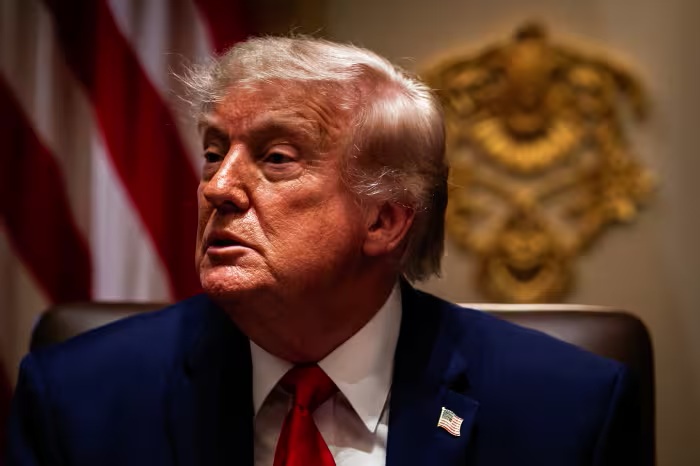
- President Trump signed an executive order on June 2 asking AI companies to voluntarily submit frontier models for government security review up to 30 days before public release.
- Federal agencies have 60 days to develop a classified benchmark for measuring advanced cyber capabilities and defining which models qualify as "covered frontier models."
- The order explicitly rules out mandatory licensing or pre-clearance, a concession made after the White House scrapped a stricter version last month over concerns it would stifle innovation.
The White House asks to see frontier models before the public does
The executive order signed Tuesday establishes a new framework for how the federal government interacts with the most powerful AI systems before they reach the market. Under the order, companies building frontier models are asked to submit those systems for a voluntary security review up to 30 days before public release, allowing government testers to evaluate whether a model poses advanced cyber risks.
The review mechanism centers on a classified benchmark that federal agencies must develop within 60 days. That benchmark will define what counts as a "covered frontier model," drawing a line between AI systems powerful enough to warrant government attention and everything else. The National Institute of Standards and Technology and the Department of Defense are expected to lead the benchmark's development.
The order also creates an AI cybersecurity clearinghouse, a centralized body that will coordinate between AI companies, critical infrastructure operators, and federal agencies to identify and patch software vulnerabilities at scale.
"The United States continues to lead the world in AI because of innovation and a refusal to stifle it with overly burdensome regulation."
White House fact sheet, June 2, 2026A softer version survived internal debate
This is not the order the White House originally planned. An earlier draft, expected last month, gave the government up to 90 days to review advanced models before release. Trump pulled it at the last minute, saying he was concerned the timeline would put American companies at a disadvantage in the global AI race, particularly against Chinese competitors.
The final version cuts the review window to 30 days and adds an explicit carve-out: nothing in the order authorizes mandatory licensing, pre-clearance, or permitting requirements for developing, publishing, or distributing AI models. That language is designed to reassure the industry that the order creates a feedback channel, not a gate.
The practical impact depends on participation. The order is voluntary, meaning companies can decline the review without penalty. But the creation of a classified benchmark introduces a formal definition of "frontier" that could shape future regulation, congressional action, or procurement rules. For the first time, the U.S. government will have its own technical threshold for what constitutes an advanced AI system, even if enforcing compliance around that threshold remains a question for another day.
Santage is committed to independent, transparent journalism. This article is produced in accordance with Santage's Editorial Standards and aims to provide accurate and timely information. Readers are encouraged to verify information independently.