
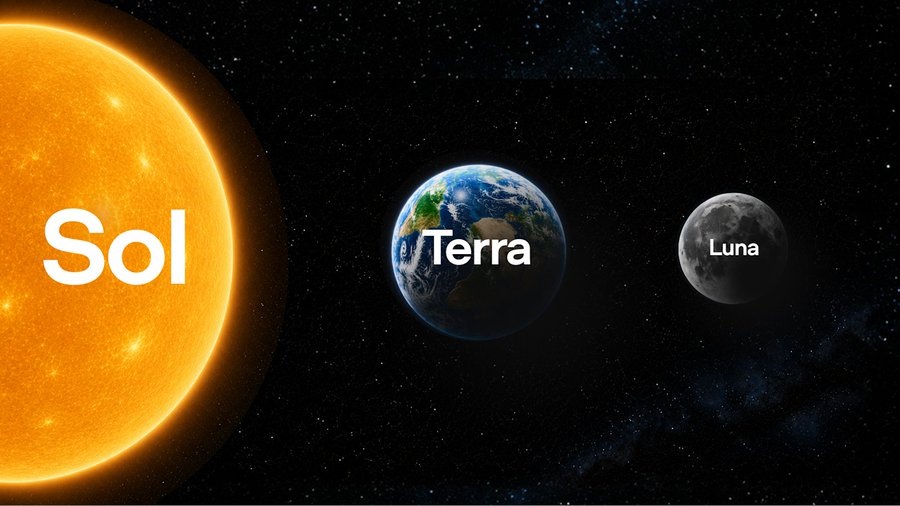
- OpenAI launched GPT-5.6 Sol on June 26 with the strongest cybersecurity capabilities of any model it has shipped, alongside two smaller variants, Terra and Luna, forming a new tiered model family.
- Access to all three models is restricted to approximately 20 companies whose participation has been cleared by the US government, the first time a commercial AI release has been formally gated this way.
- OpenAI dedicated 700,000 A100-equivalent GPU hours to automated red-teaming before launch and introduced real-time generation pauses for high-risk requests, with broader public access planned for coming weeks.
GPT-5.6 Sol ships three models but only approved partners can access them
OpenAI released the GPT-5.6 series on June 26 with a new tiered structure: Sol, the flagship model designed for complex, long-horizon reasoning; Terra, positioned at competitive performance with GPT-5.5 at 2x lower cost; and Luna, a fast, low-cost model aimed at high-volume workloads. Sol is priced at $5 input and $30 output per million tokens. Terra runs at $2.50 and $15. Luna at $1 and $6.
The new naming system makes capability tiers explicit. Sol, Terra, and Luna identify durable performance levels that can improve independently across generations. The model number identifies the generation. According to OpenAI's announcement, GPT-5.6 Sol is the company's most capable model for cybersecurity work. On ExploitBench, it matches the performance of Anthropic's Mythos Preview, a model restricted to a small set of vetted US organizations, while using roughly one-third of the output tokens.
Access to all three models remains restricted. OpenAI previewed them with the US government before launch and, at the government's request, limited initial availability to approximately 20 companies whose participation was disclosed to federal officials. Broader ChatGPT and API access is planned for the coming weeks, but the preview rollout was shaped by government engagement, not by commercial readiness alone.
| Model | Input (per 1M tokens) | Output (per 1M tokens) | Positioning |
|---|---|---|---|
| Sol | $5.00 | $30.00 | Flagship, max reasoning, ultra mode |
| Terra | $2.50 | $15.00 | GPT-5.5 performance at 2x lower cost |
| Luna | $1.00 | $6.00 | Fast, affordable, high-volume |
Source: OpenAI, June 26, 2026
The cybersecurity argument for government-restricted access
OpenAI's announcement describes a layered safeguard stack that goes further than any previous release. The model is trained to refuse prohibited cyber assistance, including requests that attempt to disguise intent or jailbreak the model. Real-time classifiers monitor output as it is generated. For higher-risk outputs, generation can be paused while a larger reasoning model reviews the conversation before deciding whether to release a response. Account-level signals are tracked across conversations to distinguish repeated misuse from legitimate dual-use security work.
The automated red-teaming effort behind the launch is significant. OpenAI dedicated 700,000 A100-equivalent GPU hours specifically to finding universal jailbreaks, attacks that work across many prompts rather than one narrow scenario. Focusing on universal failures instead of specific known bypasses tests the safeguard architecture more adversarially and generates a broader database of failure patterns to guard against in future releases.
"We don't believe this kind of government access process should become the long-term default. It keeps the best tools from users, developers, enterprises, cyber defenders, and global partners who need them."OpenAI, GPT-5.6 Sol preview announcement, June 26, 2026
Despite the capability step-up, GPT-5.6 Sol does not cross what OpenAI's Preparedness Framework classifies as the Cyber Critical threshold. In testing involving Chromium and Firefox, it identified bugs and exploitation primitives but did not autonomously produce a functional full-chain exploit under tested conditions. OpenAI acknowledges that benchmark thresholds cannot capture every real-world use pattern, which is part of why the model launches with both stronger safeguards and a restricted access period.
The precedent most coverage is underweighting
The technical story is significant. The structural story is more significant.
GPT-5.6 Sol is the first major commercial AI model whose initial access was determined not by enterprise readiness, API availability, or pricing, but by a list of companies vetted with the US government. OpenAI describes this as a short-term step taken in collaboration with the administration as the government develops a broader cyber executive order framework and a repeatable process for future model releases.
That last phrase matters. The stated goal is not a one-time accommodation but a repeatable process. If that framework materializes, future frontier model releases with strong cybersecurity or biological capabilities would be structured around pre-approval criteria set by federal agencies. AI companies would compete not only on model performance but on their relationship with government evaluation infrastructure.
What this access model means for AI builders worldwide
The immediate consequence is a two-tier market. Companies on the approved list can integrate GPT-5.6 Sol's capabilities now, while competitors wait weeks for broader access. In cybersecurity, where speed of detection and patching matters, weeks is a meaningful gap.
For the AI industry, the GPT-5.6 preview period is a proof-of-concept for something governments have wanted for years: a pre-release window in which regulators can evaluate frontier capabilities before they reach the public. Until now, this existed only informally. The longer-term consequence is precedent. Once a formal mechanism exists for government vetting of commercial AI releases, the question becomes how far it extends. Cybersecurity capabilities triggered this instance. Biology capabilities, which GPT-5.6 also improves on, could trigger the next. The boundary between capability that requires government clearance and capability that does not will be one of the defining regulatory negotiations of the next several years.
The GPT-5.6 Sol launch is not a restriction on AI progress. It is a preview of the governance structure that the most powerful AI systems will eventually operate inside. The question is not whether that structure will exist, but who designs it and on what terms.
Santage is committed to independent, transparent journalism. This article is produced in accordance with Santage's Editorial Standards and aims to provide accurate and timely information. Readers are encouraged to verify information independently.