
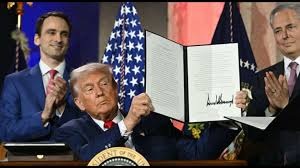
- President Trump canceled the signing of an AI executive order on May 21, 2026, that would have created a voluntary pre-release review process for frontier AI models.
- The order collapsed after AI adviser David Sacks and tech executives lobbied against it, with Trump saying it "gets in the way" of America's AI lead over China.
- The US now has no federal AI governance framework while the EU has begun enforcing the AI Act, creating the widest transatlantic regulatory gap in the history of the technology sector.
The executive order would have given government early access to frontier models
The order that reached Trump's desk had been months in the making. At its core was a voluntary agreement: AI companies would share advanced models with the federal government before public release, giving agencies a window to evaluate safety and security risks. The review period had been a point of negotiation between industry and government, with drafts proposing windows ranging from 14 days to 90 days.
A separate cybersecurity provision outlined a "clearinghouse" formed by the Treasury Department and other agencies to find and fix security vulnerabilities in unreleased models. Major AI companies including OpenAI and Anthropic had been involved in the negotiations.
The word "voluntary" matters. This was not the EU's mandatory compliance regime. It was the most modest version of federal AI oversight that the administration could propose: an opt-in review process with no enforcement mechanism and no penalties for non-participation.
Trump framed the cancellation as protecting America's competitive lead
Speaking to reporters on May 21, Trump said he "didn't like certain aspects" of the order and believed it would undermine the country's position in the AI race. "We're leading China, we're leading everybody, and I didn't want to do anything to get in the way of that lead," he told reporters, according to CNBC.
The competitive framing reveals how the White House views AI governance: as a potential drag on innovation rather than a condition for sustainable deployment. In this framing, any friction in the development pipeline, even voluntary, risks ceding ground to Chinese AI labs that operate with no comparable oversight expectations from their government.
What this framing misses is that competitiveness and governance are not inherently opposed. The EU's AI Act, which began enforcement proceedings this year, creates compliance costs, but it also creates a clear operating environment that reduces legal uncertainty for companies deploying AI across 27 member states. US companies operating in Europe must comply with the AI Act regardless of what happens domestically.
The real power shift happened before the signing ceremony
The collapse of the executive order is less about one document and more about who holds influence over US AI policy. AI adviser David Sacks opposed the order, and tech executives contacted the president directly in the hours before the scheduled signing, according to Axios.
This sequence matters for the AI industry. The executives who helped kill the order did not just prevent one regulation. They demonstrated that the current administration will defer to industry preferences on AI governance, even when the proposed measures were voluntary and had been negotiated with the companies themselves.
For AI labs, this creates a paradox. In the short term, they face no new federal requirements, which simplifies domestic operations. In the medium term, the absence of a US framework means that the EU's AI Act becomes the de facto global standard by default, because companies that want to serve European customers must comply with European rules regardless of American inaction.
The transatlantic regulatory gap is now the widest it has ever been
The EU began enforcement of the AI Act in 2026 with investigations already underway. The UK's AI Safety Institute continues to evaluate frontier models. Canada, Japan, and Singapore have all published AI governance frameworks. China has implemented its own algorithmic regulation requirements.
The United States, home to every major frontier AI lab, now stands as the only major AI-producing nation without a federal governance framework of any kind. The Biden-era executive order on AI safety was revoked in early 2025. Its replacement has now been killed before it could be signed.
This is not a temporary gap. With no executive order, no legislation moving through Congress, and an administration that views regulation as a competitive liability, the US is unlikely to produce a federal AI framework before the 2028 election cycle. That means at least two more years in which the world's most powerful AI systems are developed, trained, and deployed under no federal safety or transparency requirements.
The companies building frontier AI models may prefer this arrangement today. The question is whether they will still prefer it when the first major AI incident occurs and the federal government has no existing framework to respond with, only the option of reactive, punitive legislation drafted in crisis.
Santage is committed to independent, transparent journalism. This article is produced in accordance with Santage's Editorial Standards and aims to provide accurate and timely information. Readers are encouraged to verify information independently.