
- Musk said on November 1 that Grok Bot, which SpaceX says had 800,000 paid weekly users in early October, costs more to serve than it earns, as users hit weekly limits early.
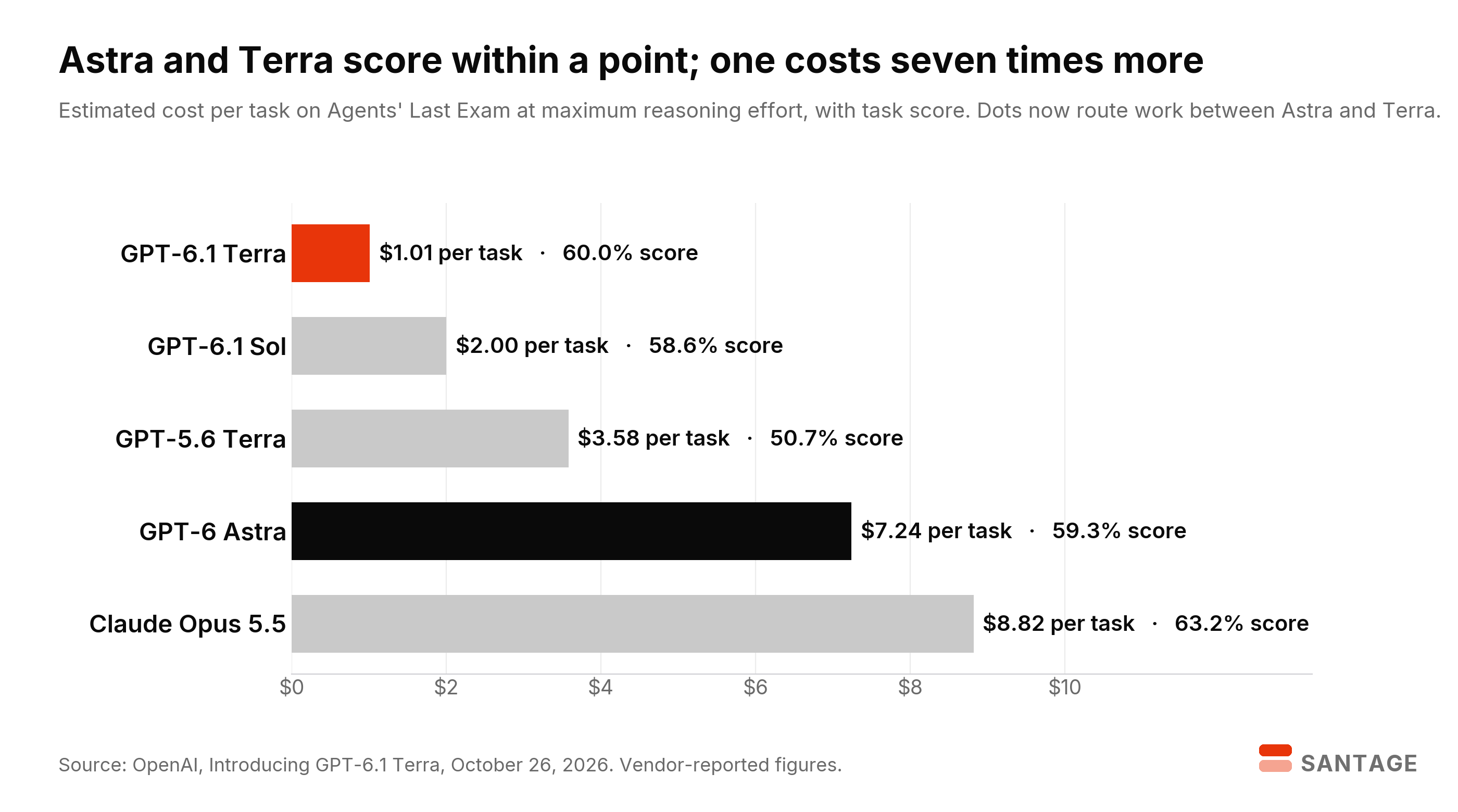
- On November 3 OpenAI began letting dots split work across models, including GPT-6.1 Terra, which OpenAI says matches GPT-6 Astra on Agents' Last Exam at about one-seventh of the cost per task.
- Agents that work around the clock on a flat subscription break the pricing model built for chatbots, and both companies are now moving toward metered work and cheaper models underneath.
The two most aggressive bets on personal AI agents ran into the same bill in the same week. On November 1, Elon Musk said the cost of serving Grok Bot, SpaceX's always-on assistant, was “unsustainably high relative to revenue” after subscribers burned through their weekly allowances days early. Two days later, OpenAI changed the engine under its own agents, called dots, so they can hand parts of their work to GPT-6.1 Terra, a model it prices at a tenth of the per-token rate of GPT-6 Astra, the flagship that originally ran every dot.
Dots and Grok Bot sell round-the-clock work for a flat monthly fee
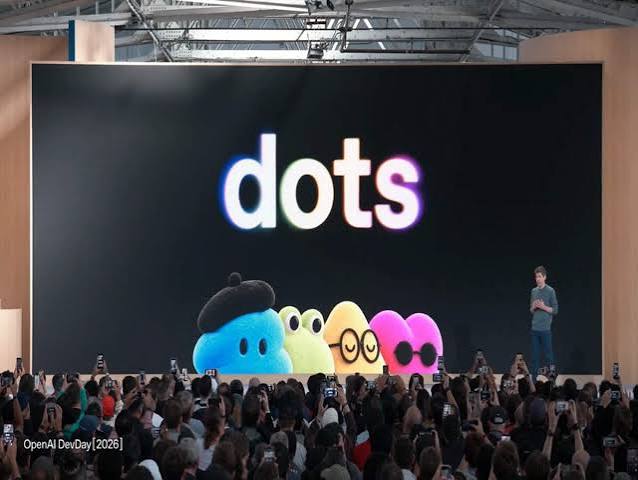
OpenAI launched dots at its DevDay event on September 29. Each dot runs on GPT-6 Astra with its own cloud computer and browser, connects to more than 4,000 apps, and, in OpenAI's words, can “work towards your goals 24/7.” When the user is away it keeps going, running what OpenAI calls proactive research across connected apps. The first dot comes inside the Pro and Business Premium plans “at no extra cost,” with an allowance for deeper work and extended limits for the first month after launch.
SpaceX's Grok Bot launched in mid-August on the same premise and grew faster. SpaceX president Gwynne Shotwell told analysts on the October 20 earnings call that it had 800,000 paid weekly users in early October, more than double the month before. Then the weekly limits began to bite, and a subscriber asked Musk for a reset.
A chatbot's cost ends with each reply, while an agent's cost keeps running
A chat subscription works because usage is bounded by human attention: a person can only type so many messages a day, so the heaviest users cost a predictable multiple of the lightest. An AI agent that keeps a virtual computer running and checks your inbox while you sleep removes that ceiling, and the most enthusiastic customers become the most expensive ones. Musk made the point himself on the earnings call, telling analysts that users “use it more per week, not use it less.”
For SpaceX the cost has a second layer. Its AI segment earns most of its revenue by renting compute to outside labs, and Musk has said he aims to split capacity roughly evenly between Grok and those tenants. Every GPU hour a subscriber's agent occupies is an hour that could have been sold to another lab at market rates, so “unsustainably high” is measured against that rental income as well as against electricity.
Model routing lets OpenAI cut the cost per task without cutting the product
OpenAI's response arrived as a short note at the top of its launch page, with no change to prices or caps.
“We’re expanding the family of frontier models that power dots to include GPT‑6.1 Terra. Your dot can draw on different models for different parts of its work.”
OpenAI, Introducing dots, update dated November 3, 2026
The economics sit in the benchmark OpenAI published when it released Terra on October 26. On Agents' Last Exam, a test of professional computer work such as turning architectural drawings into a 3D model, OpenAI says Terra performs on par with GPT-6 Astra at one-tenth its price per token, and its chart puts Terra at $1.01 per task at maximum effort against $7.24 for Astra. If most of what a dot does in a day is reading screens, filling forms and summarizing inboxes, a router that sends that work to Terra and saves Astra for hard reasoning can cut the bill several times over while users see the same product. Adam Fry, who runs ChatGPT's consumer business, told reporters on November 2 that dots are “on the compute heavy side” and that wider access depends on efficiency gains of exactly this kind.
| OpenAI dots | SpaceX Grok Bot | |
|---|---|---|
| Launched | September 29, 2026 | Mid-August 2026 |
| Default model | GPT-6 Astra, now routed with GPT-6.1 Terra | Grok, with outside models added in October |
| How it is sold | First dot included in Pro and Business Premium | Bundled with X subscriptions, weekly limits |
| Disclosed scale | Not disclosed | 800,000 paid weekly users, early October |
| Response to cost | Cheaper model for parts of each task | Tighter weekly allowances |
Source: OpenAI, Introducing dots (update of November 3, 2026); SpaceX third-quarter 2026 earnings call; Elon Musk on X, November 1, 2026.
Grok Bot's users found the cost of an always-on agent through their weekly limits, while OpenAI moved the same cost onto a cheaper model before most dot users had to notice.
Agent pricing is moving from seats toward metered work
OpenAI's launch post already describes where this goes: users will be able to add more dots and pay to raise each one's speed or the total amount of work it takes on per month. That is pricing by output, closer to a cloud bill than to a software seat, and it is the logical end point once a product's marginal cost tracks how much work it does.
For companies building on agents, the lesson from this week is that the model choice is now a cost-control layer that has to be engineered from the start. A team that sends every step to a flagship model will meet the same wall Grok Bot hit. One that classifies tasks and routes routine steps to a cheaper tier keeps margin as usage grows. The providers best placed to offer flat-feeling prices are the ones that own a range of models and the compute beneath them, which describes OpenAI, Google and Anthropic more than it describes the thousands of startups wrapping their APIs. Those same chips are also the subject of today's other story, as Nvidia reportedly limits how much partner cloud capacity can go to Chinese customers.
Always-on agents were sold as tireless digital employees, and both companies have now confirmed that a tireless employee needs a budget. The next phase of the agent market will be decided by who can make a day of agent work cheap enough to sell at a consumer price, and routing between models is the first serious attempt to do it.
Santage is committed to independent, transparent journalism. This article is produced in accordance with Santage's Editorial Standards and aims to provide accurate and timely information. Readers are encouraged to verify information independently.