
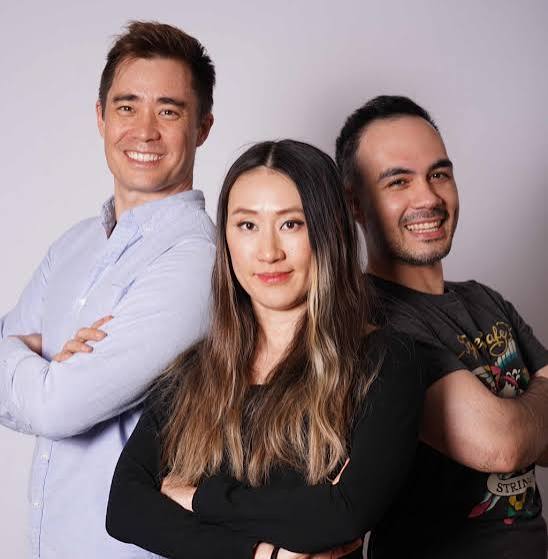
- Andreessen Horowitz led TypeSafe's $870 million Series A at a $7.5 billion valuation, with Sequoia Capital, seed investor DCVC and angels joining, and a16z's Martin Casado taking a board seat.
- TypeSafe says a third of the Fortune 500 already use Jev, which returns a choice, score or probability with a confidence level, priced at $0.042 per million input tokens with output free.
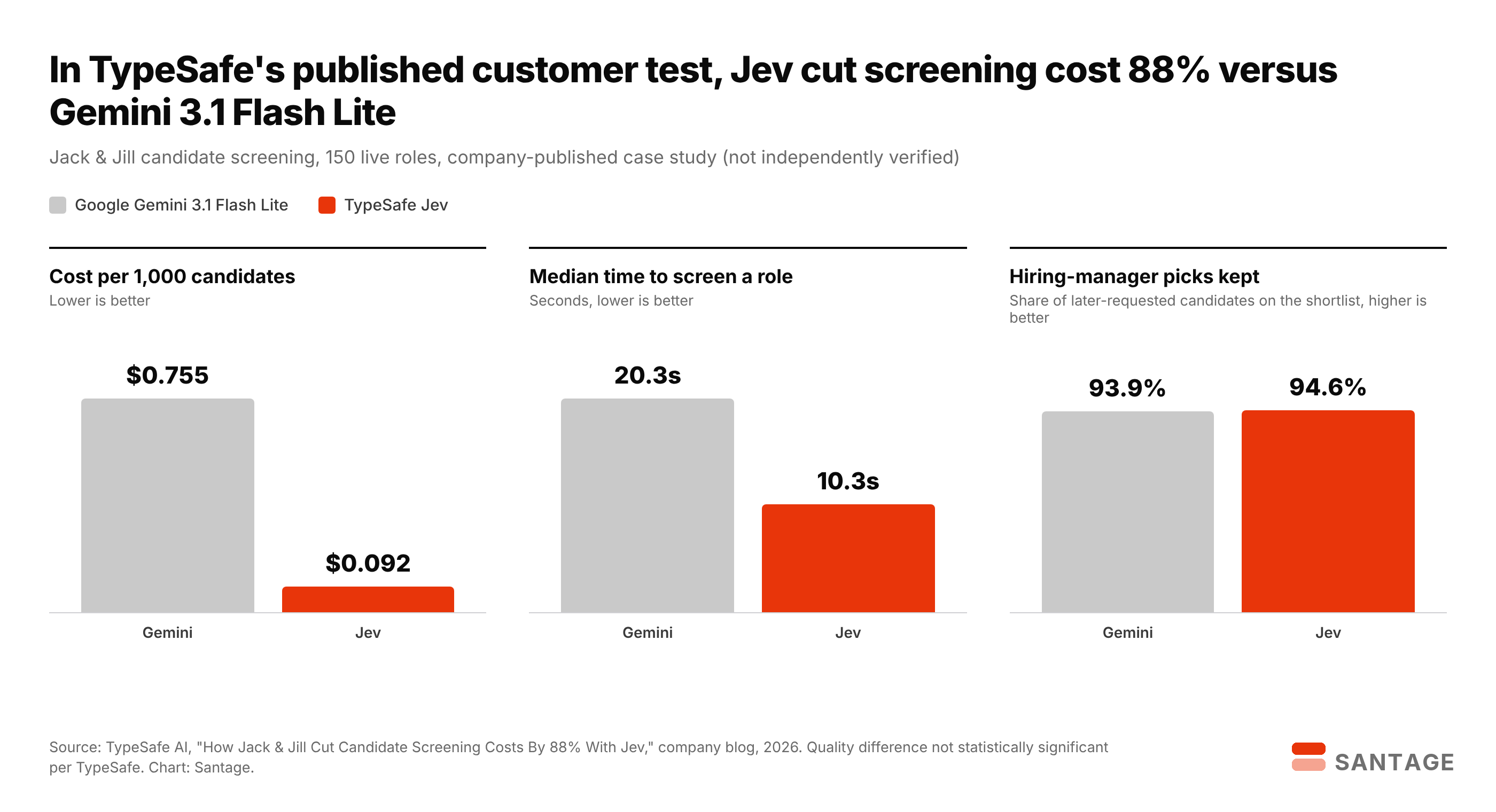
- The only published customer test, from recruiting startup Jack & Jill, shows 88% lower cost than Google's Gemini 3.1 Flash Lite at similar accuracy; no third party has benchmarked Jev.
TypeSafe AI, the San Francisco startup behind a model called Jev, raised $870 million at a $7.5 billion valuation on October 9, just 24 days after it came out of stealth with a $40 million seed. Investors are paying that price for a model that writes no text at all, a sign that a slice of venture money now sees the cheap, high-volume decisions buried inside enterprise software as a market separate from chatbots.
a16z leads TypeSafe's $870 million round 24 days after Jev's launch
The company announced the round in a characteristically informal blog post that confirms the size, the $7.5 billion valuation and Casado's board seat, alongside Sequoia, DCVC and “a bunch of the best angel investors,” with Bloomberg first reporting the terms. TypeSafe was founded in 2024 by chief executive Diogo Almeida, a co-author of OpenAI's InstructGPT work, with Erik Gafni and former Meta research engineer Sasha Sheng. When Santage covered Jev's launch on September 15, the company had raised $40 million and its speed and cost claims were untested; it has since published one detailed customer case study and says it has “saved customers millions of dollars in production.”
| Round | $870 million Series A, led by Andreessen Horowitz |
| Valuation | $7.5 billion |
| Time from public launch | 24 days (September 15 to October 9, 2026) |
| Other investors | Sequoia Capital, DCVC, angel investors; Martin Casado joins the board |
| Fortune 500 adoption | About one in three companies, per TypeSafe |
Jev prices decisions against the cheapest tier of language models
Jev runs on a transformer, yet it skips text generation and returns typed answers that software can act on directly, such as which candidate to shortlist or whether a transaction looks fraudulent, together with a confidence score that tells the program whether to proceed or escalate to a person. That design lets TypeSafe charge only for input. In the Jack & Jill case study, the recruiting marketplace swapped Jev in for Gemini 3.1 Flash Lite across 150 live roles and saw cost per 1,000 candidates fall from $0.755 to $0.092 and median screening time drop from 20.3 to 10.3 seconds, while slightly more of the candidates hiring managers later requested stayed on the shortlist.
That is the territory where frontier labs have been cutting prices hardest. Anthropic launched Claude Haiku 5.5 this week at $0.10 per million input tokens and $0.50 per million output tokens, and Jev undercuts it on input while charging nothing for output. Classification, routing and scoring calls make up a large share of enterprise inference volume, so a specialist that wins there takes revenue from the small-model tiers that subsidize the big labs' frontier work.
Uses the per-1,000 costs in TypeSafe's Jack & Jill case study ($0.755 and $0.092). Real costs depend on prompt length and task.
The caveats from September still apply. Every performance figure comes from TypeSafe or its customer, the Fortune 500 claim names no companies, and the company's speed comparisons have not been reproduced by an independent evaluator.
TypeSafe's valuation now rests on a single bet: that much of the AI inside companies will run as silent, cheap decisions inside software, and that the company pricing those decisions by the input can take that business from the chat models built to talk.
Santage is committed to independent, transparent journalism. This article is produced in accordance with Santage's Editorial Standards and aims to provide accurate and timely information. Readers are encouraged to verify information independently.