
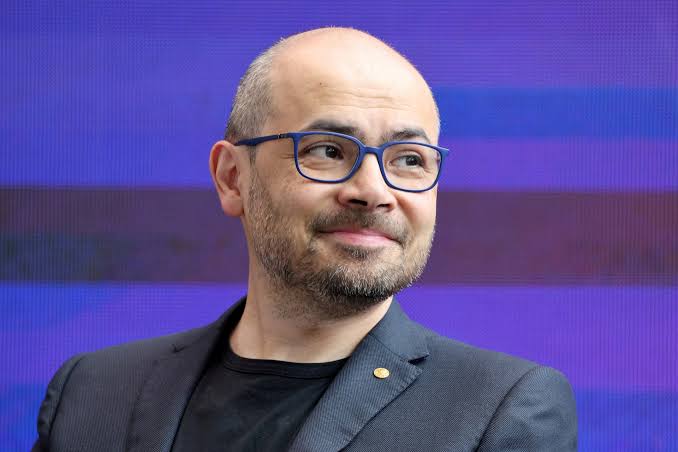
- On August 5, Google reorganized its AI leadership: Demis Hassabis gave up the Google DeepMind CEO title to become chairman of the unit and chief scientist of Alphabet, while Koray Kavukcuoglu, a 13-year veteran and the unit's CTO, was elevated to senior vice president and put in charge of Gemini model development.
- Chief Scientist Jeff Dean is leaving after nearly 27 years to co-found Discovery Loop, taking Google Brain co-founder Quoc Le, infrastructure pioneer Sanjay Ghemawat, and Gemini technical lead Oriol Vinyals with him. Google will back the venture as founding investor and cloud partner.
- Alphabet shares fell roughly 5 percent on the news, wiping out well over 150 billion dollars in market value, even as the company framed the moves as a deliberate shift toward execution.
Google reorganizes its AI chain of command around Gemini
The clearest way to read Google's August 5 reshuffle is by what each new role is built to do. Hassabis, the Nobel laureate who ran DeepMind through AlphaFold and the Gemini era, moves up and out of daily operations. His new titles, chairman of Google DeepMind and chief scientist of Alphabet, point at long-horizon research, external representation, and his continued leadership of the drug-discovery spinout Isomorphic Labs. In his own memo he framed the change as a chance to focus on the big picture and help influence what is to come.
The person now responsible for the product is Kavukcuoglu. He is a 13-year DeepMind veteran who helped build WaveNet and the deep Q-network that launched the modern reinforcement learning wave, and as CTO he already sat close to the engineering. Elevating him to senior vice president reporting to Sundar Pichai, with direct control of the Gemini roadmap, concentrates the model in the hands of someone whose recent work has been about getting systems out the door rather than authoring the papers behind them.
"Demis and I have been long discussing a role that allows him to put his full attention on actively shaping the future of AGI. He has described us as standing in the foothills of the singularity, and has been spending a lot of his time engaging externally."Sundar Pichai, memo to Google employees, August 5, 2026, via Reuters
The exits are the part that should worry Google
A leadership title change rarely moves a stock five percent. What moved Alphabet was the second half of the announcement. Jeff Dean, the person most associated with Google's foundational AI infrastructure, is leaving after nearly 27 years to co-found Discovery Loop, a startup aiming to automate the experimental loop of scientific research itself. He is not going alone. Sanjay Ghemawat, his longtime collaborator on the systems that made Google Google, Quoc Le, a co-founder of Google Brain, and Oriol Vinyals, a technical lead on Gemini, are co-founding it with him.
| Jeff Dean's tenure at Google before departing to co-found Discovery Loop | 27 years |
| Senior Google AI scientists leaving together, including a Gemini technical lead | 4 |
| Drop in Alphabet shares on the day of the announcement | ~5% |
Losing one of these people is a research setback. Losing all four in a single venture is the departure of an institutional layer, the tier of scientists who set direction rather than execute it. That Google agreed to be a founding investor and cloud partner in Discovery Loop softens the optics and keeps a tie to the work, but it does not change the fact that four of its deepest technical minds now report to a cap table instead of to Pichai.
A bet on execution, made from behind
The reorganization reads as an answer to a specific problem. Gemini has shipped late repeatedly, and its frontier releases have trailed models from OpenAI and Anthropic in the head-to-head comparisons that decide developer mindshare. Santage has covered that pattern through three consecutive Gemini misses this year. Putting an operator in charge of the model and moving the visionary to a strategy seat is what a company does when it decides its problem is delivery, not ideas.
Google is not short of intelligence. It is short of shipping velocity, and it just reorganized to admit that the two are not the same problem.
The risk in that bet is subtle. Google's historic advantage was never a single product cycle. It was the depth of a research bench that produced the transformer, the infrastructure to train on it, and the talent to do both again a year later. Optimizing the org chart for the current race can quietly trade away the thing that wins the next one. Discovery Loop is a live example of the danger: the people who would have built Google's next foundational advance are now going to build it somewhere else, with Google as a minority backer rather than the owner.
What this means for the frontier race
For OpenAI and Anthropic, the immediate read is favorable. Their chief rival has publicly restructured under pressure, lost four senior scientists in one stroke, and told the market it is prioritizing execution, which is a tacit admission that execution has been the weak point. For enterprise buyers weighing Gemini against Claude and GPT, the reshuffle adds uncertainty at exactly the moment Google needs to project stability on its model roadmap.
For Google, the honest framing is that this is a forced correction, not a victory lap. Concentrating AI power in California under an operator who reports straight to the CEO could genuinely compress Gemini's release cycles and close the frontier gap. It could also mark the moment Google stopped being the lab that defines the field and became a company competing to keep up in it. The org chart now says the priority is shipping. The four scientists walking out the door are the reminder of what that priority costs.
Santage is committed to independent, transparent journalism. This article is produced in accordance with Santage's Editorial Standards and aims to provide accurate and timely information. Readers are encouraged to verify information independently.