
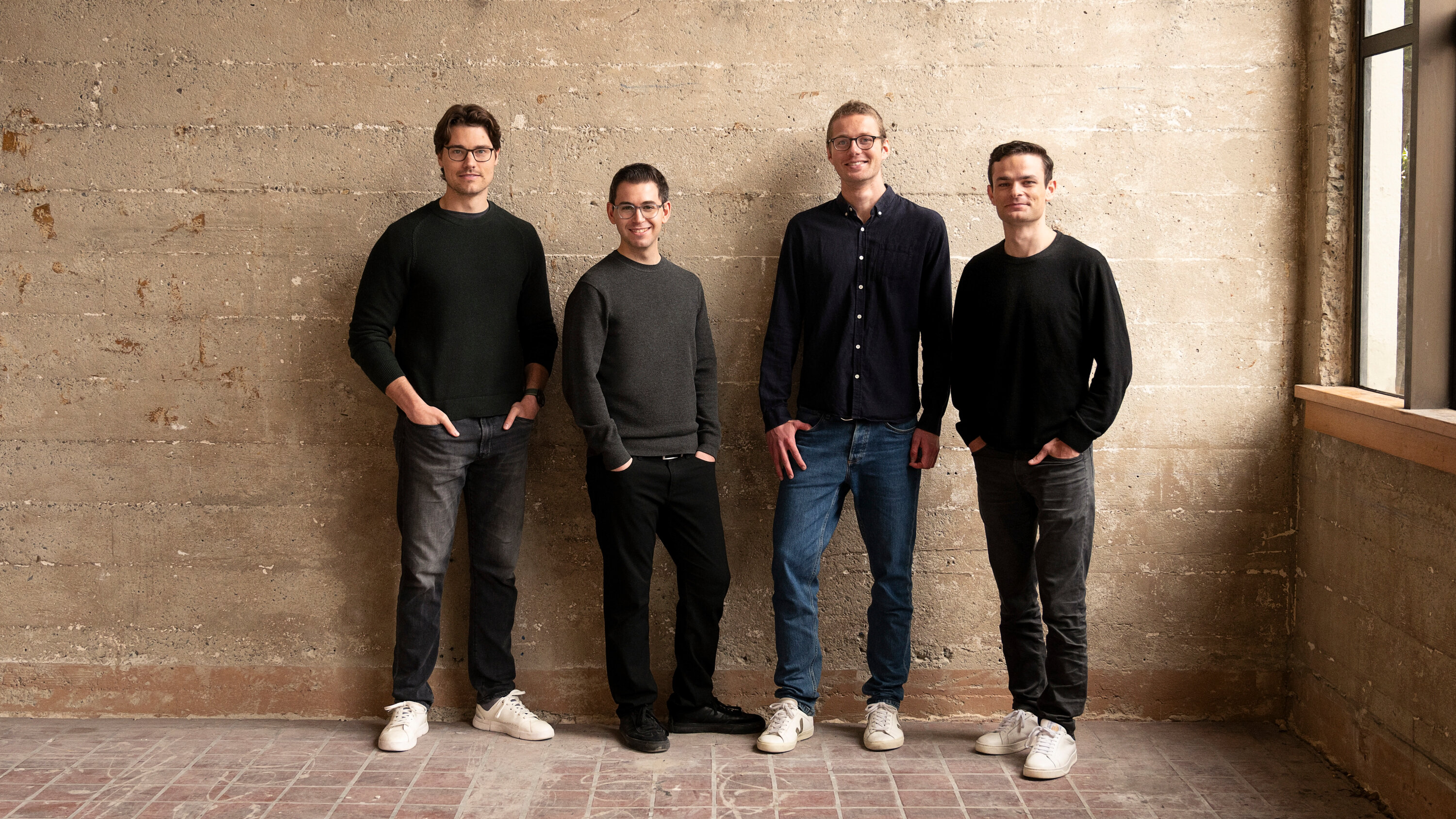
- Chai Discovery raised a $400 million Series C at a $3.8 billion valuation, up from $1.3 billion in December 2025, a near tripling in roughly seven months.
- The round was led by Index Ventures with Kleiner Perkins, Sequoia, and Dimension, and Pfizer, Eli Lilly, and Novartis already run Chai's molecular-design models.
- OpenAI sits on the cap table as an existing investor, one of the clearest signals yet that frontier labs see drug design as a core AI market, not an adjacent one.
Chai reaches a $3.8 billion valuation on molecular-design models
Chai Discovery closed a $400 million Series C at a $3.8 billion valuation, according to the company's announcement. The round was led by Index Ventures, with participation from Kleiner Perkins, Sequoia Capital, and Dimension, alongside new backers including Bain Capital Ventures, Battery Ventures, and Baillie Gifford. Existing investors Thrive Capital, OpenAI, Menlo Ventures, and General Catalyst also returned.
The valuation math is the headline. Chai raised its Series B at $1.3 billion in December 2025. Seven months later it is worth $3.8 billion, a jump that outpaces almost any enterprise software comparable and reflects a specific bet: that AI systems which predict how proteins fold and how molecules bind can compress the most expensive stage of drug development.
Chai builds antibody and molecular-design models that forecast which drug candidates are worth testing in the physical world. That is a narrow, high-stakes prediction problem, and it is one where frontier general-purpose models are weak and specialized models can win.
| Metric | Detail |
|---|---|
| Raise | $400 million, Series C |
| Valuation | $3.8 billion, up from $1.3 billion in December 2025 |
| Lead investor | Index Ventures, with Kleiner Perkins, Sequoia, and Dimension |
| Notable backer | OpenAI, an existing investor |
| Enterprise users | Pfizer, Eli Lilly, Novartis |
| Product | Antibody and molecular-design models for drug candidates |
Why pharma is paying for prediction, not chemistry
The pull here is commercial, not theoretical. Pfizer and Eli Lilly already use Chai's models, and Novartis is among the pharmaceutical names in its orbit. These are companies that measure a single failed clinical trial in hundreds of millions of dollars and years of lost time. A model that raises the hit rate on which molecules advance does not need to be perfect. It needs to be better than the status quo, and cheaper than a wet-lab campaign that ends in failure.
That is the structural reason a drug-design model can command a $3.8 billion valuation with a fraction of the revenue of a mature SaaS company. Its output plugs directly into a pipeline where the cost of being wrong is enormous. When the alternative to a prediction is a multi-year, nine-figure experiment, enterprises will pay a premium for a model that narrows the search space before the first pipette moves.
The comparison that matters is not other software vendors but the internal cost of the work Chai replaces. A large pharmaceutical company runs armies of computational chemists and burns years screening candidates that never reach a patient. A model that reliably flags the molecules worth synthesizing does not sell efficiency in the abstract, it removes cost from the single most expensive line in the research budget. Priced against a failed Phase II trial rather than against a rival tool, $400 million of investment and a $3.8 billion valuation look less like exuberance and more like an arbitrage on the economics of failure.
What Chai's raise signals about AI's move into the pipeline
The deeper signal is where the money is flowing. For two years, the largest AI rounds funded horizontal infrastructure: chips, clouds, and foundation models. Chai represents a different thesis, that the outsized returns now sit in vertical AI aimed at a single industry's most expensive bottleneck. Drug discovery is the clearest early example because its economics are so lopsided, but the pattern generalizes to any sector where being wrong is measured in years.
OpenAI's presence on the cap table sharpens the point. A frontier lab investing in a specialized biology model is a tacit admission that general models will not own every valuable prediction problem, and that the frontier of applied AI runs through domain-specific systems built on proprietary scientific data. The moat is not the model architecture, which diffuses quickly. It is the experimental data and the pharma relationships that competitors cannot download.
The moat is not the model architecture, which diffuses quickly. It is the experimental data and the pharma relationships competitors cannot download.
That distinction is what makes Chai a template rather than a one-off. The winning vertical AI companies of this cycle will not be the ones with the cleverest architecture, since architectures are copied within months. They will be the ones sitting on a proprietary loop of experimental results that feeds the next model version, paired with customers whose own data deepens the moat every quarter. Chai has both, and its backers are paying for the compounding, not the current model.
The number most coverage missed
The most telling figure is not the $400 million or the $3.8 billion. It is the seven months. A near tripling of valuation in that window, in an unglamorous corner of AI, tells you where sophisticated capital now expects the next wave of returns. The frontier labs will keep making headlines with each new general model. But the investors writing the checks are increasingly betting that the durable value in AI accrues to the companies that point it at one industry's hardest, most expensive problem, and own the data that makes the prediction work.
Santage is committed to independent, transparent journalism. This article is produced in accordance with Santage's Editorial Standards and aims to provide accurate and timely information. Readers are encouraged to verify information independently.