
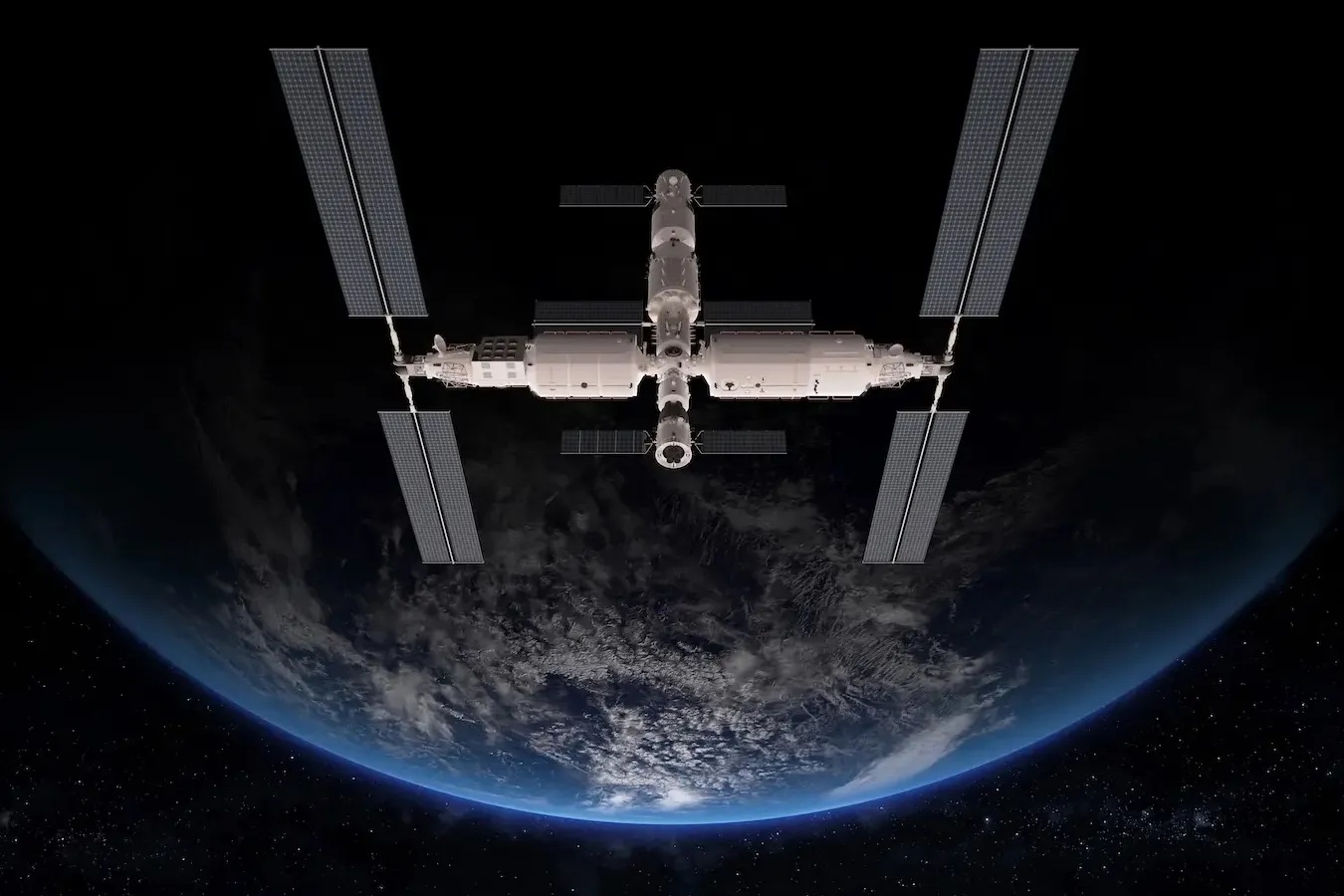
- Google and SpaceX are in active negotiations to launch orbital data centers, with Google's internal "Project Suncatcher" targeting prototype satellites by 2027.
- SpaceX is pitching orbital compute as a core thesis ahead of its own IPO, reportedly targeting a $1.75 trillion valuation later this year.
- Terrestrial data centers remain significantly cheaper than orbital alternatives when construction, launch, and maintenance costs are factored in, raising the question of whether this is an engineering breakthrough or an investor narrative.
The pitch is simple enough to fit on a slide deck: AI models need power. Earth is running out of places to put it. Space has unlimited solar energy and no permitting delays. Build the data centers in orbit.
That is the version of the future Google and SpaceX are now actively discussing. The Wall Street Journal reported on May 12 that the two companies are in talks to launch Google's test products for orbital data centers, with SpaceX providing the launch infrastructure. Google has been developing the concept internally under the name Project Suncatcher, and plans to put prototype satellites into orbit by 2027 to test how machine learning workloads perform outside the atmosphere.
The timing is not accidental. SpaceX is preparing for what would be the largest technology IPO in history, with a reported valuation target of $1.75 trillion. Orbital data centers are a central part of the growth story SpaceX is selling to prospective investors, positioned as the next trillion-dollar market after satellite broadband. A partnership with Google, the company that operates more AI compute than anyone except perhaps Microsoft, gives that thesis an anchor customer.
Google's motivations are different but converging. The company spent an estimated $75 billion on capital expenditures in 2025, much of it on data center construction, and has publicly acknowledged that finding new sites with adequate power, water, and grid connections is becoming a constraint. Alphabet's stock has rallied 160% over the past year in part because investors believe it owns more of the AI infrastructure stack than its competitors. Orbital compute would extend that advantage into territory where no one else is operating.
The engineering case is real, if early. Solar energy in orbit is roughly five to eight times more intense than on the ground because there is no atmosphere, no weather, and no night cycle on a properly oriented satellite. Cooling, paradoxically, is also simpler in certain respects: the vacuum of space allows for radiative cooling systems that do not require water. And the regulatory burden is different. There are no local zoning boards in low Earth orbit, no utility interconnection queues, and no neighbors objecting to the noise of backup generators.
But none of that changes the fundamental cost problem. Launching hardware to orbit costs roughly $1,500 to $2,700 per kilogram on a Falcon 9 today. A single AI server rack weighs between 500 and 1,000 kilograms. Starship, SpaceX's next-generation vehicle, promises to bring launch costs below $500 per kilogram, but it has not yet completed a commercial cargo mission. Even at Starship pricing, the capital cost of placing a megawatt of compute in orbit would be multiples higher than building it on the ground.
The idea is not new, and its most prominent advocate has been talking about it publicly for months. In December 2025, SpaceX CEO Elon Musk posted on X that orbital data centers were inevitable, framing the concept as a natural extension of Starship's economics.
That post now reads less like speculation and more like foreshadowing.
Latency is the other constraint. Light takes roughly 4 to 10 milliseconds to travel from low Earth orbit to a ground station, depending on altitude and geometry. That delay is acceptable for batch training runs and some inference workloads, but it rules out the real-time applications, interactive agents, autonomous vehicles, financial trading, that consume a growing share of AI compute demand. Orbital data centers, at least in their first generation, would be limited to workloads where latency is not a binding constraint.
Maintenance is a third issue that neither company has publicly addressed in detail. Terrestrial data centers can swap a failed GPU in hours. A chip failure in orbit means the hardware is effectively lost until the next servicing mission, if one is even planned. Radiation hardening adds cost and reduces performance. And the thermal cycling of moving in and out of Earth's shadow, roughly every 90 minutes in low orbit, creates material stress that shortens component lifetimes.
The honest read on the Google-SpaceX talks is that this is a real engineering exploration layered on top of a real investor narrative. Google needs to show it has a plan for compute growth beyond the next five years. SpaceX needs to show that its launch business has a demand curve steep enough to justify a valuation larger than every aerospace company combined. Orbital data centers serve both stories, even if the economics do not close today.
Anthropic has also entered the picture indirectly. Reports last week indicated that Anthropic signed a deal with SpaceX involving compute resources from xAI's Memphis data center, with the potential for collaboration on orbital infrastructure in the future. That deal suggests Anthropic is hedging its own compute supply chain, adding another large buyer to the emerging orbital thesis.
Whether orbital data centers become a real market or remain a conference-stage concept depends on two variables: whether Starship achieves its cost targets, and whether terrestrial power constraints become severe enough to make the premium worth paying. Both are plausible within five years. Neither is certain. For now, the most concrete outcome of the Google-SpaceX talks may be the most predictable one: two slides in SpaceX's IPO roadshow with Google's logo on them.
Santage is committed to independent, transparent journalism. This article is produced in accordance with Santage's Editorial Standards and aims to provide accurate and timely information. Readers are encouraged to verify information independently.